What B2B Buyers Actually Do Before They Request a Demo
Buyers decide on vendors before they ever contact sales.
By the time a B2B buyer fills out a demo request form, the deal is basically over. 6sense's 2025 Buyer Experience Report, surveying close to 4,000 global B2B buyers, found that whichever vendor already sits in the buyer's head before any contact wins about 80% of the time. In 95% of deals, that pre-contact favorite was already on the buyer's Day One shortlist. The demo is theater, and everyone in the room knows it except the vendor still polishing slide 40.
How much of the journey happens before any vendor knows a deal is in motion
Buying cycles are getting shorter, and that's bad news for sellers, not good news. 6sense's 2025 numbers show the average cycle dropped from 11.3 months to 10.1 months. That sounds like progress until you ask who benefits from the missing month. It isn't the vendor.
First contact moved earlier too, from 69% of the journey down to 61%, meaning buyers reach out six to seven weeks sooner than they used to. But 83% of buyers say they mostly or fully define their purchase requirements before they ever talk to sales, per that same report. Buyers show up earlier. They just show up decided already, the way a regular at a diner still grabs a menu out of habit before ordering the usual.
Mixing up earlier contact with earlier influence is the mistake most sales teams are still making. Buyers compressed their own research timeline. They did not open the door wider for vendors to walk through it.
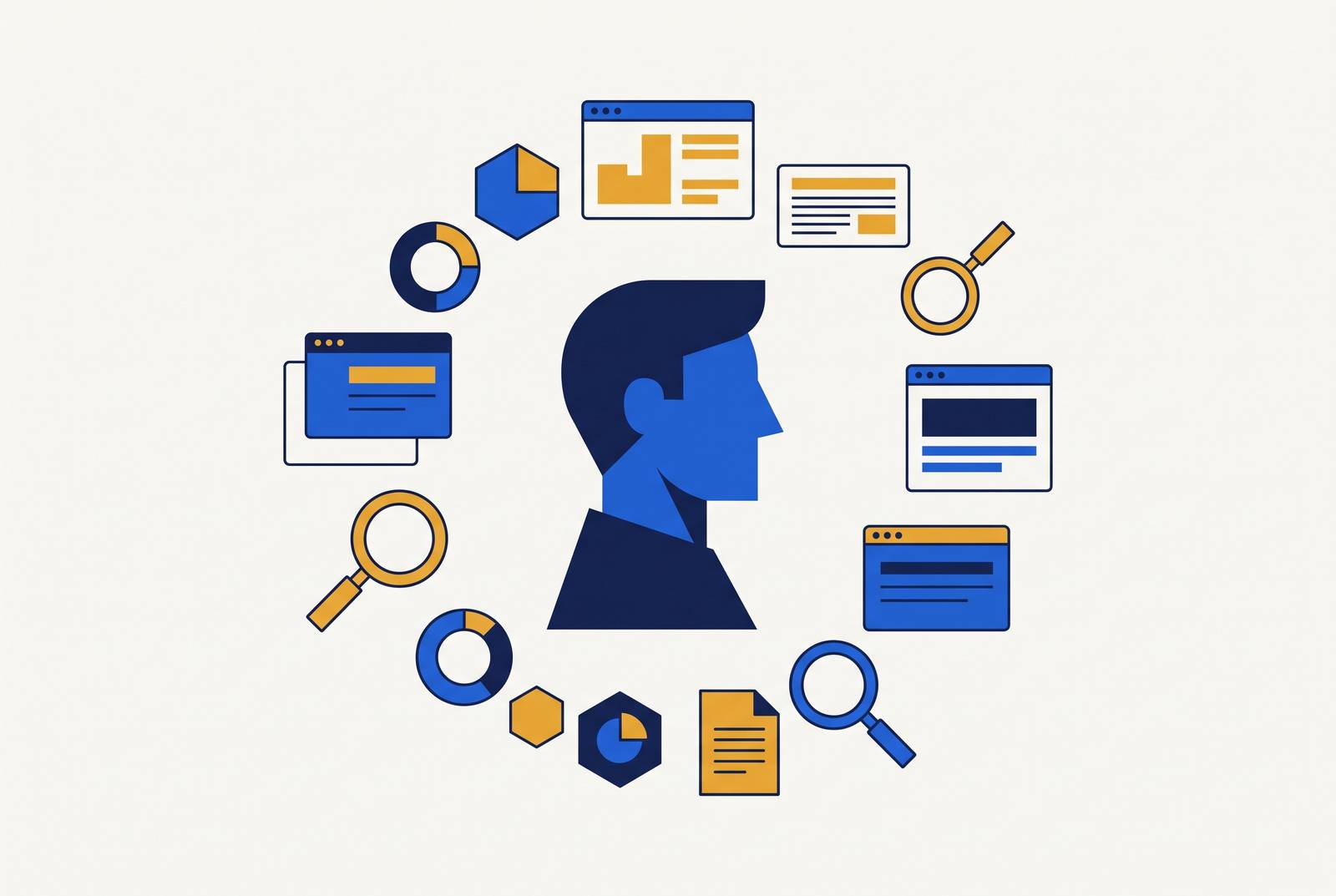
The self-directed research behaviors buyers actually use during that hidden phase
Shortlists form fast and barely move after that. Forrester's 2024 research found 92% of buyers start with at least one vendor already in mind, and 41% start with exactly one preferred vendor before any formal evaluation begins. Calling that a shortlist is generous. It's a decision wearing a shortlist costume to a party it already RSVP'd to.
TrustRadius and Pavilion's 2024 research backs this up: shortlists have shrunk to two or three products on average, and 71% of buyers end up purchasing their top choice anyway. Miss the start of that list, and getting invited back in later is a long shot.
None of this means buyers are slacking on homework. Forrester tracked buying interactions per purchase jumping from 17 in 2019 to 27 in 2021, so buyers work harder now, just privately, out of view of the vendor's CRM. They've done this before, too. 6sense's 2025 data puts the average buyer at eight or nine prior purchase journeys in their category, so they're pattern-matching against past cycles instead of starting cold.
Gartner found 61% of buyers actively prefer a rep-free experience. Research is a positive definition standing on its own, not something a rep needs to fill. It's a moat buyers are digging on purpose, and they brought their own shovel.
Where peer trust and dark social channels concentrate the most buying influence
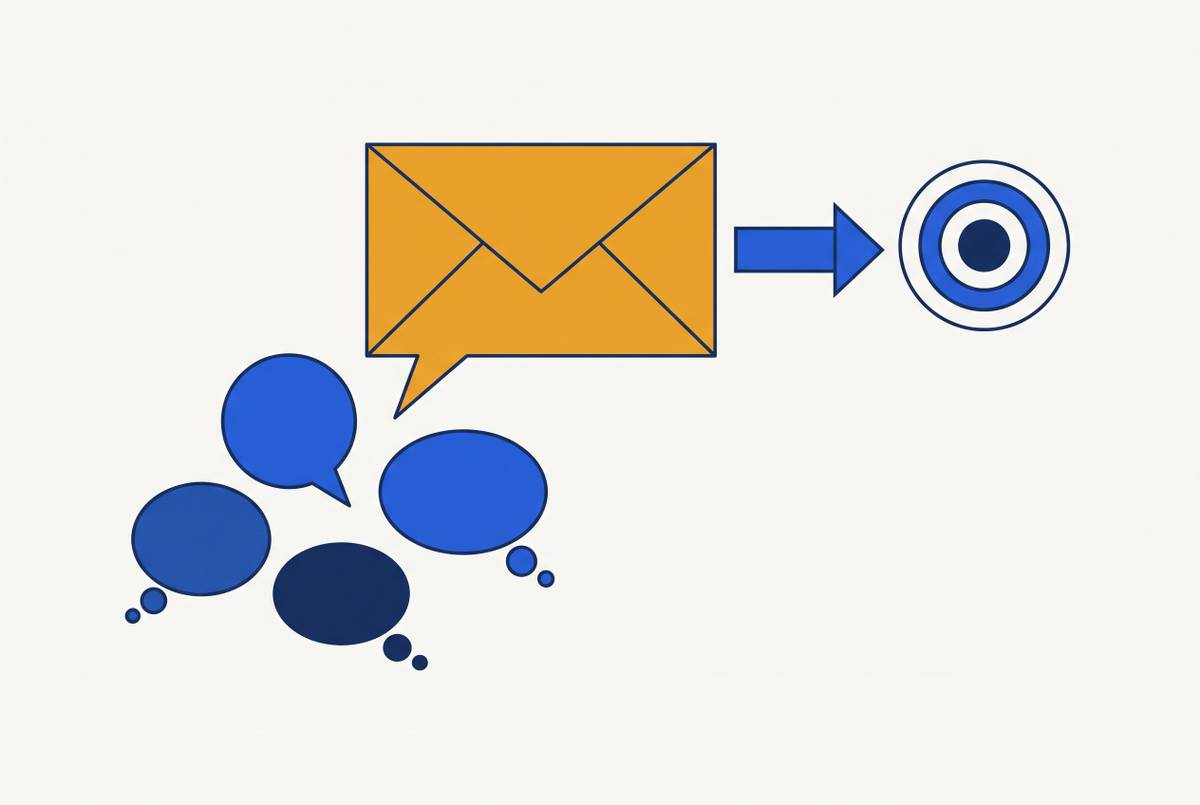
Dark social sounds like something out of a spy movie. It's really just people talking to each other where nobody's watching: Slack groups, DMs, forwarded emails, closed communities. No tracking pixel, no campaign tag, no paper trail.
Qualtrics XM Institute found in 2024 that 64% of B2B buyers trust peer recommendations from these private channels more than analyst reports or vendor content. Vendor content sits at the kids' table in that hierarchy of trust, and no amount of polish moves it to the adult one.
The attribution failure plays out the same way every time. Someone reads an article, forwards it to a colleague in Slack, and that colleague books a demo. The CRM logs it as "direct traffic." No source, no campaign, no credit. The influence was real. The receipt just never got printed.
Public reviews are the visible edge of that same trust network. G2's annual research shows the share of buyers consulting public review sites nearly tripled, from 13% in 2021 to 31% in 2024. TrustRadius found 56% of buyers consult existing product users before buying, with the share rising further for enterprise deals. Peers first, then reviews, then third-party write-ups, and somewhere near the bottom, whatever the vendor says about itself.
LinkedIn sits at the odd intersection of all this. LinkedIn remains one of the only places where private peer trust and public, trackable content actually overlap. Dark social can't be measured into submission. It gets earned, one share at a time, in rooms the vendor never sees.
How AI tools have taken over the first step of vendor shortlisting
AI research stopped being a fringe habit a while back. 6sense's 2025 data shows 94% of buyers use LLMs somewhere in their buying process. That's not early adopters anymore. That's effectively the entire buyer population, across segments and seniority levels.
G2's 2025 Buyer Behavior Report, based on 1,100 global B2B decision-makers, found GenAI chatbots are now the number-one source shaping vendor shortlists, at 17.1%. Software review sites came in at 15.1%, vendor sites at 12.8%, market research firms at 10.6%, and peers and colleagues at just 8.9%. The chatbot beat the human colleague. Sit with that, because most sales training decks haven't caught up to it yet.
Gartner's 2025 research found buyers using generative AI during evaluation are 2.3 times more likely to lock in a shortlist before contacting a single vendor. G2's 2025 report found 69% of buyers ended up choosing a different vendor than they originally planned, based on AI chatbot guidance, with 33% buying from a vendor they'd never even heard of before. AI is shaping and even challenging what buyers already believe. It's rewriting the guest list, adding names that no human ever invited.
The top use case, per G2's 2025 report, is buyers using AI chatbots to compare vendor strengths and weaknesses head-to-head, at 41%. Review site presence now feeds both human research and machine-generated recommendations at once.
That creates a new kind of invisibility. No click, no bounce, no error message. Just silence. If a brand doesn't show up when someone asks an AI tool a category question, it gets excluded from a shortlist it never even knew existed. And 6sense's 2025 findings show 89% of buyers end up purchasing solutions with AI features built in, so AI shapes the buying decision from both directions at once.
How buying committees complicate the pre-demo journey and multiply the influence problem
Buying a piece of software now requires something close to a small parliament. Gartner's 2024 research puts the average enterprise buying group at 11 stakeholders, climbing to 20 for complex purchases. That's a 57% jump from the 7-person committees Gartner documented back in 2017.
Each added stakeholder drags down the odds of a deal closing by roughly 10 percentage points. Committees don't just slow things down, they actively kill deals: LinkedIn and Bain & Company's October 2024 research found more than 40% of B2B deals stall out purely from internal disagreement, disagreement the vendor usually never even sees happening.
Security and procurement now show up far earlier in the evaluation, not at the contract stage where they used to lurk. The people holding veto power are active during the exact part of the process vendors can't see at all.
Multiply that by 11 stakeholders, each running a private version of the same research loop (their own peer chats, their own AI queries, their own review site detours), and the picture gets messy fast. Winning over the champion who requests the demo means nothing if ten other people already formed opinions the vendor never got near.
What thought leadership actually does in the pre-demo phase and why quality is the bottleneck
At any given moment, the large majority of potential buyers aren't in an active buying cycle at all. Thought leadership is basically the only motion that reaches someone before they've started looking, which makes it far more important than most content calendars treat it.
The Edelman-LinkedIn B2B Thought Leadership Impact Report found that a large majority of decision-makers say thought leadership pushed them to research a product they hadn't previously considered. More strikingly, C-suite respondents said thought leadership made them reconsider vendor relationships they already had. It doesn't just win new attention. It unsettles loyalty that already exists.
The 2025 Edelman-LinkedIn report found 55% of hidden decision-makers, the ones who rarely talk to vendors directly, still use thought leadership to vet a company, and 95% said strong content makes them more open to being contacted at all. That same report found 71% rated thought leadership as more effective than standard marketing or sales material at showing real value, and most said they want content that challenges their assumptions, not content that pats them on the back.
Here's the catch: decision-makers consistently rate much of the thought leadership they actually read as falling short. That isn't a saturation problem, it's wide open space nobody's filled yet. Early visibility compounds into the trust that decides shortlist inclusion much later. Generic content doesn't travel. Opinionated, specific content is what gets forwarded into the private channels where the real decisions happen.
Why founder-led content on LinkedIn is the most direct way to enter the pre-demo conversation
LinkedIn continues to be where a large share of B2B tech buyers consume work content. The audience is there. It's just not listening to company pages, and treating LinkedIn like a billboard for the brand account is the wrong move, full stop.
Buyers trust people, not logos. That's the same instinct driving dark social trust in the first place: a recommendation from a person carries more weight than an announcement from a brand account. LinkedIn happens to be the one place where that peer-driven, opinion-first trust meets a channel vendors can actually show up in and measure. Founders who post consistently land in the feeds of buyers who'd never open a cold email, let alone reply to one.
That matters even more for the hidden decision-makers who avoid vendor contact entirely. Cold outreach never reaches them, but a founder's post in their feed does, quietly, without asking for a reply.
Opinionated, category-level commentary from a founder builds the kind of mental shortlist presence that outbound can't buy at any price. Company pages are for announcements. Founder profiles are where perception gets built, and perception, not the spec sheet, decides whether a brand makes the pre-demo shortlist in the first place. Consistent founder content on LinkedIn feeds every other input at once: brand recognition, AI visibility, peer conversation, review site name recognition. It all traces back to the same source.
What vendors should do differently knowing the deal is decided before the demo
If shortlist inclusion is the actual prize, demo volume is the wrong scoreboard. Brand recognition, thought leadership reach, review site presence, and AI visibility are the leading indicators that matter, and most sales dashboards don't track a single one of them.
Budget needs to follow buyer trust, not vendor habit. Peer review programs, founder-led LinkedIn content, and third-party placements deserve real investment, while outbound sequences get actively dodged by the very people they're aimed at. That reallocation is the wrong fight to lose.
AI visibility needs an audit, plain and simple. Type the top category questions into ChatGPT, Perplexity, and Gemini, and see who shows up. G2's 2025 finding that 33% of buyers purchased from a vendor they'd never heard of, purely on AI guidance, cuts both ways: a threat if the brand is invisible, an opening if it isn't.
Champions need better ammunition, too. The person requesting the demo is quietly herding 11 stakeholders toward consensus, and what they need isn't another slide deck aimed at one decision-maker. They need material built for security, for finance, for procurement, for the people who never sit in on the call but still get a vote.
Thought leadership deserves treatment as pre-sales infrastructure, not brand decoration sitting in a folder nobody opens. Decision-makers who encounter thought leadership can be persuaded before they ever declare intent to buy anything.
Vendors who consistently show up with sharp, opinionated content in the channels buyers already trust don't win deals one at a time. They become the name that gets typed into the chatbot, or dropped into the Slack thread, before the buying conversation has even officially started.