Why Founders Who Narrow Their ICP Close Deals Faster
Narrowing your ICP cuts sales cycles and multiplies revenue per day.
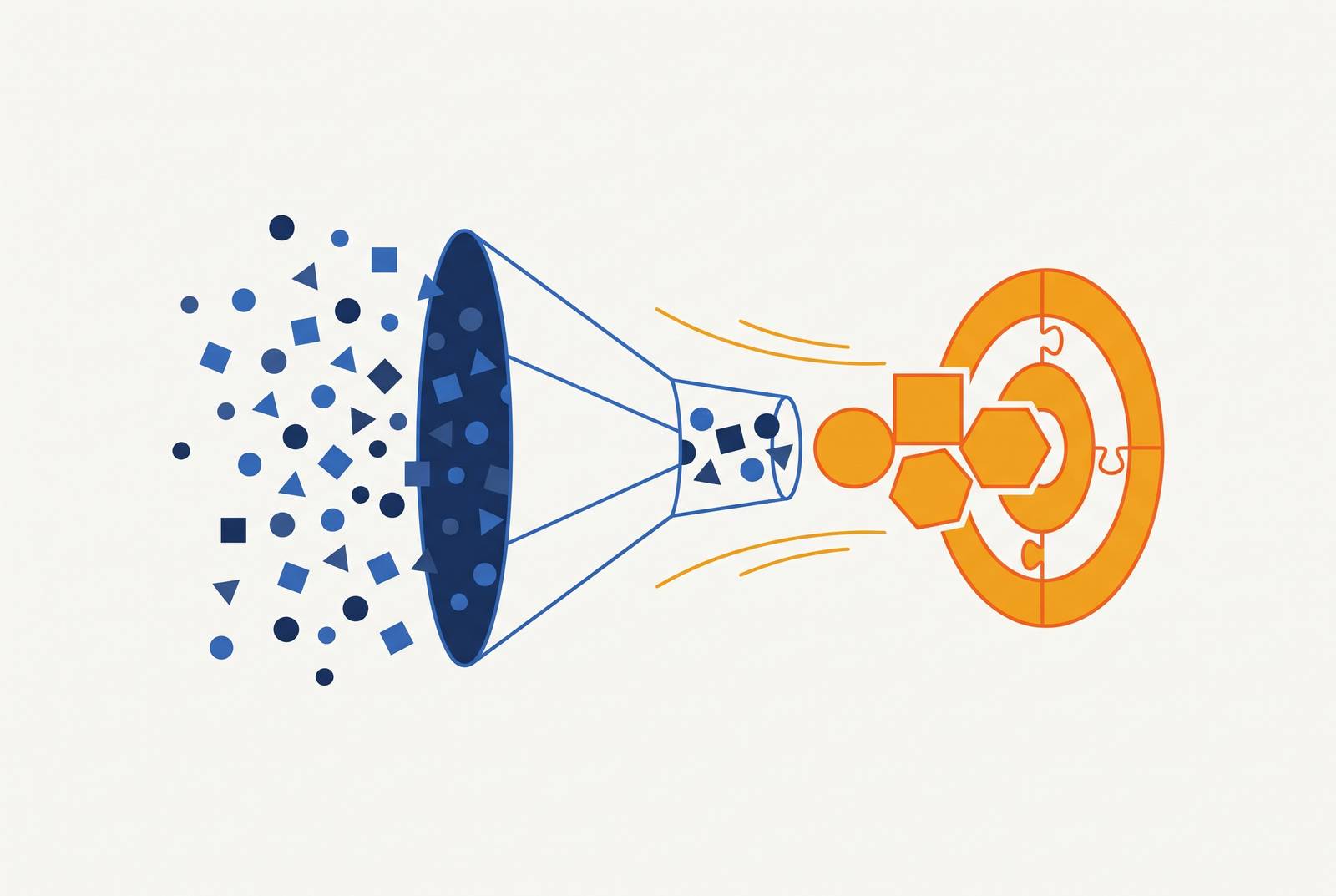
Founders who narrow their ideal customer profile close deals faster because there is less work for buyers to do. The right prospects already feel the pain, understand why it deserves a budget, and recognize themselves in the message. A precise ICP connects targeting, messaging, and founder content so that sales conversations begin with fit.
Why B2B SaaS sales cycles have been getting longer, and what that cost looks like
B2B SaaS sales cycles have grown substantially since 2022, though the slowdown looks different across categories. DevTools deals can close in under six weeks, while cybersecurity deals often take 4–9 months. A single median hides that spread. Founders pursuing the wrong accounts add avoidable education to buying processes that may already be long, pushing their own deals toward the slower end.
The cost extends beyond waiting for a signature. More time per deal means fewer deals per rep, rising customer acquisition cost, and pressure on win rates. Pipeline velocity shows how these work together by multiplying opportunities, deal size, and win rate, then dividing by cycle length to find the revenue per day. That denominator is easy to neglect when a team celebrates a growing pipeline. More opportunities can look like progress while the business gets slower at turning them into money.
What actually compresses a sales cycle — the mechanism, not the marketing advice
A narrow ICP selects accounts with a higher propensity to buy because they already experience the problem, have an appropriate budget range, and can quickly understand the value. That starting position removes foundational education from the conversation. Specific messaging then answers predictable concerns before they become separate discussions.
Non-fit prospects start much further back in the argument. The seller must establish why the category is relevant, explain why the problem deserves attention, and only then make the case for the product. Each stage adds conversations that can consume days or weeks and rarely convert. Enthusiasm does not remove those dependencies. A very energetic follow-up email is still a follow-up email.
This is why a smaller addressable pipeline can produce better sales outcomes. Narrowing changes both the quality and the number of opportunities entering the process. Win rate and cycle length improve together when prospects need less convincing about the underlying need. A larger pipe full of non-fit accounts gives the team more to do, but activity is not a payment method.
What the performance gap between ICP and non-ICP deals actually looks like
The gap does not end at the first sale. ICP-fit accounts tend to take less work to win and have strong net revenue retention above breakeven, while non-fit accounts often fall below what they need to keep their revenue at the same level. Those customers can therefore be expensive twice over. They consume more selling time before signing, then lose revenue through contraction or churn afterward.
Expansion follows the same pattern because customers whose needs closely match the product have a stronger foundation for getting more value from it. Companies with well-defined ICPs see meaningfully higher expansion revenue. Non-fit pursuit is therefore not a neutral volume strategy. It trades acquisition efficiency, sales speed, and future account value for the appearance of a broader opportunity set.
Gartner’s 2025 finding puts the share of companies with a formally documented ICP at fewer than half. Even documentation, however, does not establish that the filter is useful. A profile that admits almost any plausible buyer leaves the sales team doing qualification through lengthy conversations.
How founders define an ICP that is narrow enough to actually work
For founders building that filter, the starting point is the best existing customers. Compare accounts by revenue, conversion speed, and satisfaction, then look for shared characteristics. Customer interviews help test whether those patterns explain the purchase. The useful questions are direct. What problem was the customer trying to solve, and what measurable value did the product deliver?
A workable profile combines firmographic, technographic, and behavioral criteria. Firmographics cover company size, industry, geography, and organization type, while technographics describe the tech stack and digital maturity. Behavioral criteria cover the buyer’s pain points, decision-making processes, and buying signals. All three belong in the definition. Firmographics alone can identify companies that look alike without showing whether they have the same reason to buy.
Missing a mandatory criterion disqualifies an account, while preferential criteria raise its score. Readiness signals, including relevant job postings, recent funding, organizational change, and public mentions of the pain point, then help distinguish a fitting account from one ready to act. Quarterly reviews of conversion, cycle length, and customer lifetime value keep the profile tied to actual outcomes. Without that discipline, an ICP can become a wish list wearing a spreadsheet.
Why messaging collapses objections before they form when it is built for a specific ICP
A precise ICP gives messaging a shared starting point with the buyer. When a founder names a familiar pain in the buyer’s own language, the prospect does not have to translate a broad promise into a relevant use case. The conversation can begin with whether the solution fits. That is a different task from explaining why the problem exists or why it deserves attention.
Specificity also acts as a credibility signal. A founder describing the IT compliance pain of a Series B SaaS company demonstrates a sharper understanding than one promising to help businesses work better. Generic language asks the buyer to supply the context. Precise language shows that the seller already understands that context, so the buyer can move from first interest to a useful talk sooner.
Talking often with accounts that closely fit also makes it easier to know which objections will come up. When the same concerns recur, outreach, homepage positioning, and demo narratives can address them before a prospect raises them. The product has not necessarily changed. What changes is the amount of explanatory work left for the sales conversation.
How a founder's LinkedIn presence amplifies a narrow ICP into a pipeline engine before the first sales conversation
Forrester’s 2025 finding places the large majority of the B2B buyer journey before the first sales conversation. The measured sales cycle therefore begins well after the buyer starts learning. A founder publishing for a specific ICP can move education into that earlier period. When the prospect eventually speaks to sales, familiarity with the problem and the founder’s perspective can shorten the work still required.
Explicit positioning helps the audience select itself. Naming a specific ARR band and company type draws a different set of followers from an open call to anyone who wants to grow. A few thousand highly relevant followers can generate more qualified pipeline than a vastly larger mixed audience. Personal stories with business lessons, original data, and contrarian industry takes give that audience a specific point of view to engage with.
Gong’s own release said its first Super Bowl ad, targeting Seattle, San Francisco, and New York, helped create the company’s biggest-ever sales pipeline. That illustrates why broad visibility and targeted reach are different choices.
Founder content takes time to compound. Early inbound signals can arrive in the first few weeks, with measurable sourced pipeline following later and CAC effects developing over several months. Giving up on founder content before that stage cuts off the return before it can be seen.
How dark social and AI-mediated shortlisting make ICP-specific thought leadership structurally decisive
Dreamdata’s 2026 benchmarks place the large majority of the customer journey outside tracked activity. A CRM therefore shows only part of the process that builds trust and determines shortlist inclusion. People share recommendations in private Slack groups, community forums, and closed LinkedIn conversations where the vendor has no direct control over what they say. Peer recommendations are the most-trusted research source for B2B software buyers, ahead of analyst reports and vendor content. Being known for a specific problem gives those conversations something relevant to pass along.
G2’s March 2026 data shows that a majority of B2B software buyers begin research in an AI chatbot, and a substantial share chose a different vendor than originally planned based on AI guidance. Consistent positioning and citations influence which voices surface. A founder who keeps publishing about a narrow problem is thus more likely to be found by buyers with that problem than one who shares broad advice on topics that have little to do with each other.
The Edelman-LinkedIn 2025 B2B Thought Leadership Impact Report found that a large majority of hidden buyers spend significant time on thought leadership, with an even larger share becoming more receptive to outreach after encountering strong content. Those buyers can be forming a view before any contact appears in the pipeline. When the eventual prospect already understands the founder’s answer to their exact problem, the first conversation becomes validation.
The growth ceiling objection — when narrow becomes a constraint, and how founders navigate it
A narrow segment can eventually limit growth. That limit matters most when product-market fit brings pressure from the board, plans to hire, and hopes for a larger market. New industries, enterprise logos, and unfamiliar buyer types can all make the pipeline look healthier. Yet conversion efficiency often deteriorates as the target broadens. The extra opportunities come with education and objections the original motion was not built to handle.
Moving into a larger market cannot fix weak conversion in one the company already knows. Founders can struggle to reach or win buyers who fit and take that as a sign that there are too few of them. A larger market then becomes an expensive detour. They still have the same trouble selling, with more kinds of prospects to sell to.
Founders should establish strong win rates and retention in the first segment, then use that evidence to identify an adjacent segment with similar pain points. The ICP can move deliberately as the business earns the right to broaden it. Pipeline pressure alone is not that evidence, and a future market limit is not a reason to accept avoidable friction now.
The founder's execution sequence — from ICP definition to closed revenue
For founders putting this into practice, the order begins with customer evidence. Analyze top accounts by conversion speed, revenue, and retention, identify common firmographic, technographic, and behavioral patterns, and validate them through interviews. Document mandatory and preferential criteria as a scored filter in the CRM. This makes the definition usable in daily decisions. An ICP that cannot exclude an account is still a description.
Next, calibrate outreach sequences, demo narratives, and homepage positioning to the selected buyers’ exact pain language. Founder positioning and LinkedIn content should speak clearly to those same buyers, with specific case examples, fresh insights, and contrarian takes in place of advice for everyone. Consistency joins the two motions. The buyer should encounter the same understanding of their problem in a post, an outreach message, and a demo, rather than three different theories of whom the company serves.
Quarterly tracking should compare ICP and non-ICP conversion rates, average cycle length, and net revenue retention. If fit accounts are not converting at meaningfully higher rates, the definition may be too broad, the messaging may be poorly calibrated, or outreach may be reaching the right companies but the wrong roles. More outbound volume is not a substitute for that diagnosis. Nor should content be judged on a 30-day attribution window when the sales cycle takes longer than that.
Sales then has a narrower job to do. Instead of persuading a prospect to care, it can help an informed buyer decide whether the product fits.