What Happens When You Let the Company Page Speak Instead of the Founder
Founders who post personally build buyer trust before sales enters the conversation.
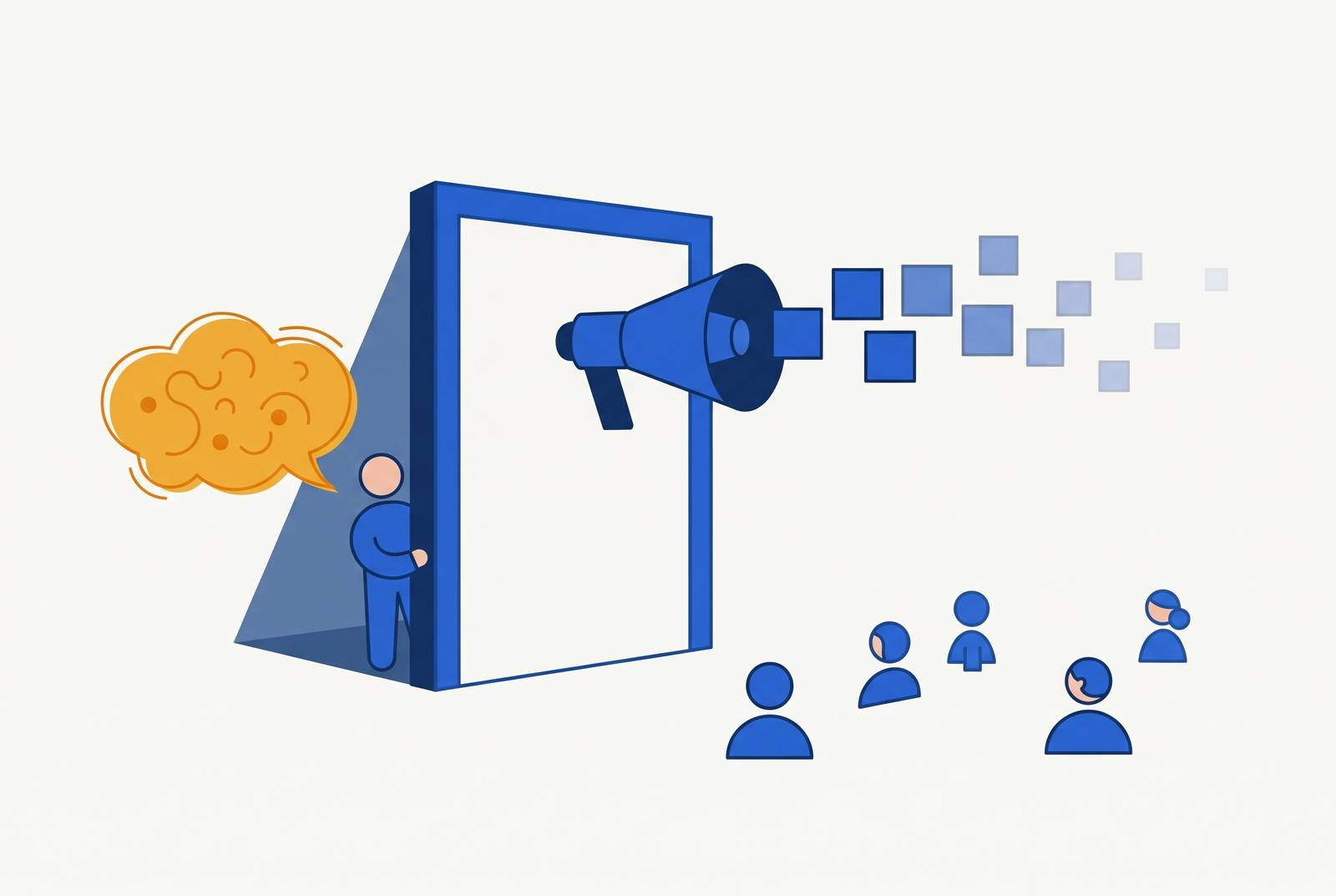
Letting the company page speak instead of the founder changes more than LinkedIn reach. It removes a human trust signal from the period when B2B buyers are deciding whom to consider, often before sales knows they exist. The company-page default is therefore not just a distribution choice. It shapes whether the business enters the shortlist with credibility already built or has to start earning it at the sales call.
What the reach gap actually looks like when measured on identical content
Refine Labs tested the same content on seven employees’ personal profiles and on its company page. The personal profiles got far more impressions and much more engagement, even though they had fewer followers. The profiles did not win because their audiences were bigger, and identical content removes the explanation that the employee posts were simply better written.
Personal profiles provide a career history, professional associations and an individual point of view that help anchor relevance. A company page lacks those personal signals. Across the broader research, personal profiles also average meaningfully higher organic reach and engagement, so the controlled result does not stand alone.
Meaningful early comments earn further distribution, and peers are more willing to comment on another person’s post than on a brand announcement. LinkedIn also stands to make money by selling brands the reach they struggle to get organically. Better copy cannot make that structural disadvantage disappear.
How modern B2B buyers make their shortlist before sales is ever involved
Lower reach would be a smaller problem if sales could reliably enter the conversation before buyers formed a preference. Buyers do their own research, compare vendors and talk to peers before bringing a seller into the process. By then, the conversation has a history. The sales team may be making its introduction while the buyer is already defending a favorite internally.
6sense’s 2025 Buyer Experience Report found that the vast majority of buying groups had put their shortlist in order before they got in touch with sellers. The early favorite then won most of the time. Being seen while buyers do their own research can help win deals as well as make the company known. A vendor that misses that period can lose a deal without ever knowing it was being considered.
Some of that research takes place in dark social, including private Slack communities, forwarded LinkedIn posts and peer DMs. These exchanges leave no trackable footprint in the brand’s analytics, and a company page cannot participate as a peer. But a founder’s post can be something people pass around and talk about. Even when a lead report is quiet, buyers can be making decisions before marketing is ready.
Why the trust deficit is the costliest consequence, not the reach deficit
Even when a company-page post reaches the right buyer, it does not arrive with the same credibility as an individual’s view. Buyers know when a company is speaking for itself and whose interests it serves. That skepticism is not a character flaw. A polished brand post is doing its job, but its job is visibly to make the brand look good.
Edelman’s 2026 Trust Barometer finds that a strong majority of B2B buyers trust content from company leadership more than content from branded channels. Buyers can evaluate judgment as well as tone. A company-page case study presents an approved account of success, while a founder explaining a failed deal can reveal what went wrong, what changed and what they would do differently. The founder’s account gives buyers more to judge than how well the company proofreads.
The Edelman-LinkedIn 2025 B2B Thought Leadership Impact Report found that most “hidden buyers,” those not yet visible to sales, consume thought leadership weekly. Strong content makes them more receptive to outreach, and a large share consider it more effective than conventional marketing at demonstrating value. Trust here has a practical expression. It is the willingness to consider a vendor before a salesperson has made the case.
Personal profiles also let people build that willingness through connection requests, comments under their own names in comment threads and DM conversations. These tools build relationships as well as distribute content. A founder can respond as the person responsible for an opinion and be questioned about it. Paid promotion can buy another appearance in the feed, but it cannot buy that relationship or make an institutional claim feel personally accountable.
What the pipeline numbers look like when a founder posts consistently versus when a company page does
When prospects arrive having already formed a view of the founder’s judgment, the commercial conversation starts from a different position. The seller is not introducing both the company and its credibility from scratch. People doing this work report that inbound leads from founders convert at higher rates than leads from outbound or company-page activity. That changes customer acquisition economics.
Early signals, including inbound DMs and impression growth, appear in the first few weeks. Consistent founder posting produces measurable pipeline, including sourced demos, in the first two to three months and compounds its effects on customer acquisition cost by the end of the first year. A single popular post is not the program. The commercial asset is the trust accumulated across repeated encounters.
Practitioners report that founders posting three to five times per week over an extended period can build inbound pipelines that compete with meaningful paid advertising budgets at a fraction of the ongoing cost. These are program estimates. Founder time and content support still cost something, and the results depend on consistency. The distinction is that the accumulated audience and credibility can keep working without every new encounter requiring another advertising payment.
What three founders did when they put their personal voice ahead of the company page
Adam Robinson, Lara Costa and Tyler Denk built trust over time, with none of the fairy-tale speed of a viral post. Each put a consistent personal voice in front of a specific audience and built trust before asking that audience to act. The sequence is the important part. Content announced an opportunity and helped show why the person offering it deserved attention.
Robinson got the word out about RB2B through approximately four LinkedIn posts each week and one newsletter per week. The content centered on personal market insight. His storytelling gave buyers a way to judge his thinking before any sales interaction. Inbound conversations began with a foundation already laid, sparing a cold product pitch the task of generating enthusiasm.
Costa’s announcement for Cleo depended on similar groundwork. Months of consistent personal content had given her audience reasons to trust her judgment before the product announcement arrived. The announcement was therefore not starting from zero. A company-page version would have faced both a smaller organic audience and the absence of that personal trust, even if the product details were identical.
Denk extended the pattern beyond customer acquisition by sharing the journey of building a newsletter platform, including challenges, metrics and lessons learned. His seed round came together in days after he had spent that time sharing his work in public. Investors who had followed the journey arrived with a view of his judgment already formed. His content functioned as an investor relations asset before there was a round to promote. The cost of founder silence extends beyond the sales pipeline to investor relations.
How founder invisibility compounds into a fundraising and category positioning problem
Investors research founders before signing term sheets, so a public voice they can trust gives them something to judge before the pitch meeting. It makes a founder’s reasoning visible over time. Jenny Fielding of Everywhere Ventures has stressed how much it helps to get to know investors through low-pressure introductions long before starting to raise money. A consistent LinkedIn presence can serve as a scalable version of that ongoing relationship-building, rather than an urgent appearance when funding is needed.
Denk’s $2.6 million raise in seven days illustrates how a short fundraising window can follow a much longer period of trust-building. The speed did not mean the relationship began that week. By sharing challenges and lessons in public, he gave investors something to judge before the formal process began. A company page cannot substitute for that founder narrative because it does not have a career, personal resilience or individual judgment for an investor to evaluate.
A founder’s public point of view can explain the market insight behind the company and make it recognizable through repetition. Without that voice, category conventions and competitors have more room to define the terms. Someone else supplies the explanation of what the category is for and which differences deserve attention.
That risk is sharper in B2B SaaS, where fear of risk and herd mentality already push brands toward similar language. AI tools producing similar copy amplify the sameness, while company pages tend toward broad acceptability. Everyone sounds reassuringly professional, which is unfortunate when the buyer needs to tell them apart. A founder can make a specific argument about the market and defend it in public, giving the company a position that is more than an approved phrase.
The workflow automation repositioning case shows what that distinction can mean commercially. Moving from “no-code automation,” a category dominated by an established player, to “IT-approved automation with governance and security” created a specific appeal to enterprise compliance buyers. The shift produced a substantial increase in enterprise ACV. Its force came from a sharper account of whom the product served and why. A credible human voice explaining and defending that position gives the market more to evaluate than a company-page announcement of new wording.
What a founder-led LinkedIn program actually requires to replace the company-page default
The alternative requires a system that preserves the founder’s judgment while delegating much of the production. The operating model described in the research uses roughly one hour of founder time each week. Recorded audio or notes capture lessons, customer conversations and opinions, which a strategist or structured workflow turns into three to five posts calibrated to the founder’s voice.
A founder commits to three to five topics over an extended period, with each post fitting one of them. Repetition helps the audience understand what the founder knows and stands for. That is different from saying the same thing endlessly. The topics provide a stable frame within which new experiences, arguments and lessons can develop.
The cadence also includes active comment engagement on posts by creators who reach the ideal customer profile. Taking part helps the founder’s own posts reach more people and keeps the work a conversation, with people talking back and forth. Publishing is only part of the work. The model depends on a named person joining relevant discussions.
Delegation without a voice card produces corporate-sounding output and flat engagement, while an inconsistent cadence causes both the audience and the algorithm to deprioritize sporadic publishers. Generic topics create a different failure by blurring what the founder stands for. Production can be delegated, but judgment cannot simply be removed. Otherwise, the business has recreated its company page with a profile photo.
The company page still has a useful job. After encountering the founder’s content, a prospect can visit it to confirm that the business is professional and active. The company page has simply been asked to do the founder’s job.