Why Your ICP Changes After You Close Your First Ten Customers
Real closed deals reveal which buying triggers actually drive sales, not your initial assumptions.
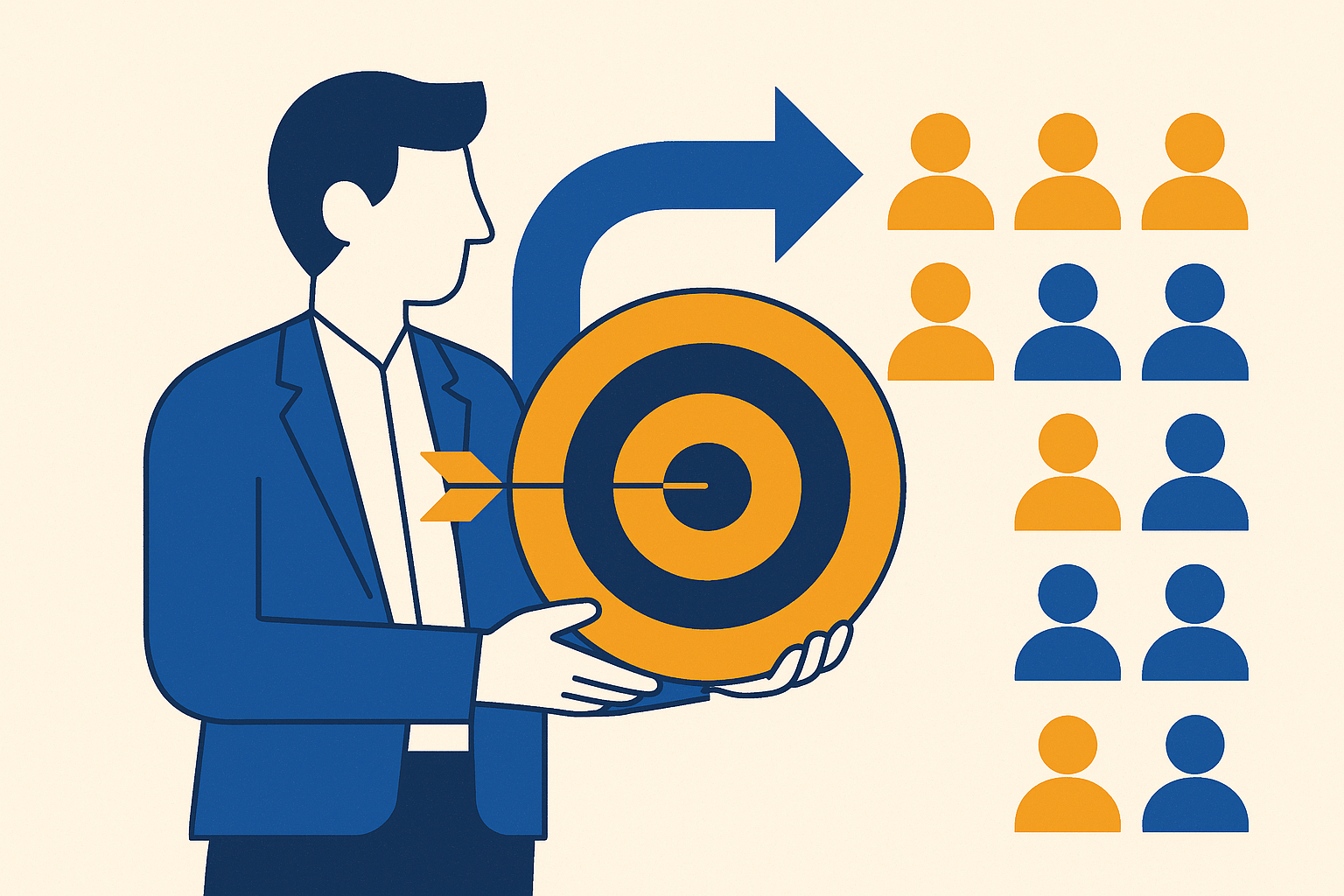
Most founders feel genuinely confident about their first ICP. They've got the slide, the firmographic filters, the tidy paragraph describing exactly who they're building for. That confidence is misplaced, because the ICP is a hypothesis dressed up as a conclusion. Early B2B SaaS sales run on founder-led outreach and personal networks, not inbound demand, so the first batch of prospects is really just a list of people the founder already knows or can get on a call with. The document that comes out of that process is a proxy ICP: a description of who the founder can reach, not who the market actually wants. Firmographic basics like industry, size, and stage get written down because they're easy to observe. The harder layers, the technographic signals, the behavioral patterns, the organizational readiness, the disqualifiers, stay blank, because there's no closed-won data yet to build them from. What looks like a five-dimensional customer profile is really one dimension wearing four disguises: companies that look like the people the founder has already talked to.
How the first ten customers expose what the initial ICP got wrong
The first ten closed deals are the first honest data a company gets. Up to that point, everything is a pitch. After it, there's a pattern, and the pattern rarely agrees with the slide. ACV, churn rate, expansion behavior, sales cycle length, none of these were things the founder selected for, yet the customers who actually signed contracts share traits across all four. That's the moment a founder notices the deck they've been presenting internally doesn't match the deals sitting in the CRM. The accounts that closed fastest, stuck around longest, and expanded the most aren't always in the segment the founder set out to win; they answer a question nobody knew to ask yet. Equally useful are the customers who churned early or ate up disproportionate support hours, because they define the negative indicators that should have been written into the ICP from day one. A familiar shape emerges: the founder targeted a company type that felt intuitive, and the best customers turned out to share a specific buying trigger, like a recent funding round, a compliance deadline, or an operational pain the founder never modeled. The objection that ten deals is too small a sample misses what's actually happening at this stage. The goal isn't statistical proof, it's directional signal, and a handful of closed deals carries more weight than a thousand prospect calls, because money changed hands in one case and not the other.
Why ICP Drift (Not Just a Wrong First Guess) Compounds the Damage Over Time
A wrong first guess is forgivable. Leaving it uncorrected is where the real damage starts. An ICP that never gets revised after those first ten customers creates a widening gap between who the company is built to serve and who it's actually chasing, and that gap gets more expensive every quarter it's left alone. ICP drift happens when a company slides from urgency-driven buyers toward broader, easier-to-reach accounts because those accounts are simpler to find. Longer sales cycles, lower win rates, and worse revenue efficiency appear in the numbers everyone recognizes. Boards tend to label these as execution problems, when the real cause is a targeting problem wearing an execution costume. The common failure modes all look different on the surface but come from the same root: defining the ICP too broadly, leaning only on firmographics, writing it once and never touching it again, or never checking it against closed-won data. Each is drift by another name. The financial gap is measurable: vertical SaaS mid-market companies with strong ICP fit post net revenue retention of 108 to 120 percent (Benchmarkit, 2025), and that gap appears in retention numbers before it appears anywhere else on the income statement. Every dollar spent acquiring a customer outside the ICP carries worse odds of ever turning into healthy unit economics, since the acquisition cost stays flat or climbs while retention and expansion both fall short. Worse, scaling the go-to-market motion before fixing the ICP locks the wrong targeting logic into hiring plans, channel budgets, and sales playbooks, and once that's baked in, the fix gets harder and pricier with each new hire and campaign. That's also where the problem gets quieter and harder to diagnose, because the signals that actually drove the first ten deals were invisible to the attribution model from the start.
Why the Buying Signals That Drove Your First Ten Customers Were Invisible to Your Attribution Model
By the time a prospect fills out a demo request form, the real decision has usually already been made somewhere the founder never saw. Buyers form their shortlist in private, and the vendor they walk in preferring is usually the one they end up choosing. Generative AI has made this harder to track, not easier: buyers increasingly start their research inside AI assistants, and those conversations leave no referrer link, no tracking tag, nothing an attribution dashboard can pick up. A founder building ICP assumptions off demo form data is working from a signal set with holes in it by design. The customers who closed were shaped by conversations, recommendations, and research the founder didn't orchestrate and can't measure after the fact. That leaves one dataset a founder can actually trust: the pattern sitting in closed-won deals, because the "they found us through X" story the attribution tool tells is probably wrong, or at best incomplete.
A Revised ICP: From Firmographics to Buying Triggers
The ten customers don't just disprove the old ICP, they hand over the materials for building a better one. A revised ICP, built from real closed-won data, adds dimensions a pre-launch guess could never include, because it explains not just who bought but why they bought when they did. Firmographic fit, the industry, size, geography, and funding stage, was always the easy layer to write down, and it still only describes a company, leaving whether that company will buy a question for the other layers to answer. The other four layers do the predicting, and none of them exist without real customers to learn from. Technographic signals become visible when founders notice which tools their best customers were already running before the deal closed, revealing integration needs and workflow maturity that no pre-launch spreadsheet could guess at. Behavioral signals surface the same way: a recent funding event, a hiring surge, a compliance deadline, a competitor getting replaced, these are the buying triggers firmographics alone will never catch, and they only become visible once real deals have closed around them. Negative indicators deserve just as much attention as the positive pattern, maybe more, since the customers who churned early or soaked up outsized support hours are quietly defining who the next version of the ICP should disqualify. Of everything in the revised model, the buying trigger carries the most weight, because it answers "who fits right now," and that distinction is what moves a deal through the pipeline faster. The revised ICP has implications beyond sales too: once it's clear which customer type gets the most value from the product, that insight should shape what the team builds next, not just who the reps call. None of this should live in a slide deck gathering dust in a shared drive. It belongs in the CRM as a scoring model, so every account gets measured against the same dimensions and reps know who to prioritize without guessing. Founders sometimes worry that narrowing the ICP this early cuts off adjacent segments that might carry higher lifetime value down the line, but the revised ICP isn't a cage, it's a starting point meant for quarterly iteration. Narrowing first produces the data needed to expand with confidence later.
Founder-Led LinkedIn Content as the ICP Validation and Amplification Engine
Once the revised ICP exists, it needs a way to get tested against real people before another dollar goes into outbound or paid campaigns, and a founder's own LinkedIn presence turns out to be the cheapest, fastest instrument for that. Personal profiles consistently reach and engage more people than company pages, and replies to founder content convert at a far higher rate than cold outbound sequences ever manage. The mechanism is straightforward: specific, opinionated content built around the revised ICP's actual pain points and buying triggers reaches the right people and produces responses, confirming or poking holes in the new positioning in real time, long before an expensive campaign gets greenlit. Certain formats carry this better than others. Personal stories with a business lesson attached, original data and research, contrarian takes on the industry, and document carousels all perform well because each one is a vehicle for a sharp point of view, and a sharp point of view is what filters in the right audience and filters out everyone else. There's a quieter layer at work too. When a founder publishes something specific and credible about the exact problem their ICP deals with, it tends to get forwarded into the private Slack channels and WhatsApp groups where buying decisions actually take shape, the places no dashboard can see. That's how a founder ends up on a shortlist they never watched get built. Generic content doesn't do any of this. It gets scrolled past by the exact audience it needed to reach, while content that names a precise problem and takes a position on it builds the kind of authority that turns into inbound pipeline. None of this happens on day one. First signals, impressions, inbound DMs referencing a specific post, tend to appear in weeks three through six. Sourced pipeline demos follow after that, and the CAC benefits that come from compounding reach take longer still. Founders who expect results in week one usually quit the strategy right before it was about to pay off. Some founders bring in a specialized content and branding partner built specifically for B2B SaaS founder-led programs, translating the refined ICP into a consistent, opinionated public voice, removing the execution burden from the founder and keeping the content tied to pipeline outcomes.
ICP Revision as a Fundraising Asset, Not Just a Sales Input
A revised ICP built from ten real customers does more than sharpen targeting for the sales team. It becomes evidence in the story a founder tells investors, and that story matters as much as the product itself. The most common gap in fundraising narratives is founders describing what their product does instead of what problem it solves at scale, for whom, and why those customers buy when they do. A revised ICP answers all three questions at once, with receipts. Investors are trying to understand why the category is big enough to matter, why the solutions already on the market fall short, why the go-to-market motion will compound rather than plateau, and why now is the moment. That last question, the "why now," gets answered concretely by a revised ICP built on closed-won data, because it points to a specific buying trigger that's active in the market right now, not a trend the founder is hoping shows up eventually. Investors also look founders up before ever taking the meeting, and a founder whose LinkedIn presence has consistently articulated the exact problem their ICP faces arrives at the fundraising table with both the data and the credibility already established. A founder who can point to specific patterns across retention, expansion, and sales cycle length across ten real customers is making a claim backed by evidence, not reciting an assumption, and that evidence is what earns investor trust. The way a founder tells this story matters as much as the data inside it. Narrating the arc from initial ICP guess to data-validated revised ICP shows market intelligence, honesty about which early assumptions were wrong, and the kind of learning speed investors are actually betting on when they write a check. The founder who says "here's what we assumed, here's what the customers taught us, and here's the sharper ICP we're scaling against now" is telling a more fundable story than the one insisting the first guess was right all along. And the work doesn't end at ten customers. The sharpest founders treat the ICP as a living model, one they revisit every quarter as the market shifts, the product evolves, and the next batch of customers teaches them something the last batch couldn't.