What Buyers Do on LinkedIn in the 90 Days Before They Contact Sales
Buyers form vendor preferences months before contacting sales on LinkedIn.
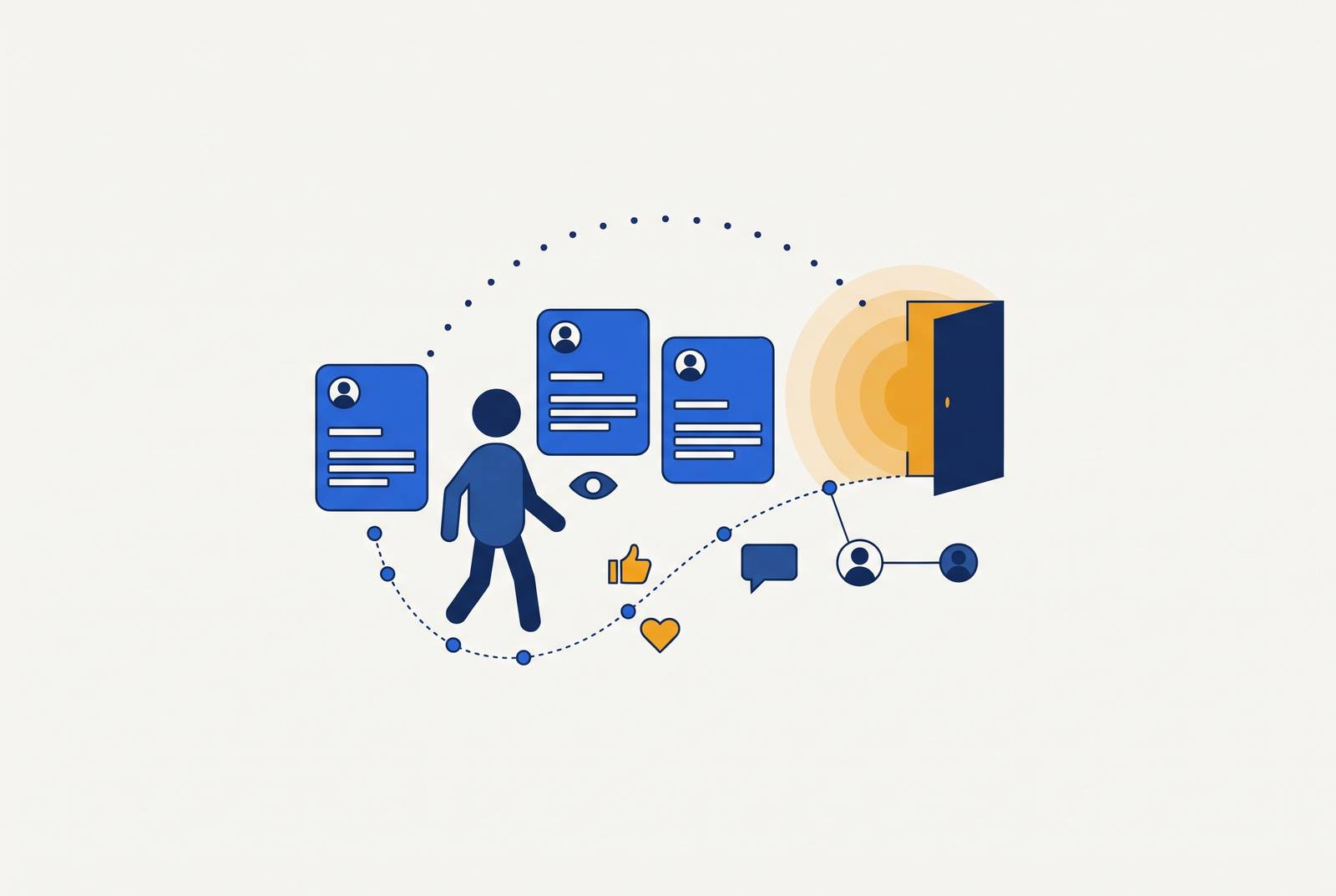
In the 90 days before buyers contact sales, LinkedIn helps them decide who to call. They read founder content, check profiles, follow conversations and build a shortlist, mostly without letting anyone know. For founders, the conclusion is plain. A credible presence during that research window is part of selling.
The 90-day window that decides most B2B deals before sales ever appears
Most founders picture the sales call as the place where persuasion begins. What buyers do shows that persuasion starts weeks or months earlier. Buyers reach sellers well past the midpoint of their journey, and 81% choose their vendor before any direct contact with a sales team. The call may still answer questions and settle doubts, but it often starts with a preference already in place.
That preference is difficult to dislodge because the shortlist forms early and rarely changes. The winning vendor was on the buyer’s day-one shortlist the vast majority of the time, and the first-choice vendor wins at a high rate. This changes what a quiet pipeline can mean. A founder may see no active opportunity while a buyer is already narrowing the field. Absence during research is therefore different from losing a competitive pitch, because the company may never get an invitation to pitch at all.
Why buyers do most of this research without leaving a trace in any vendor's system
The missing visibility is built into how buyers research. They share vendor content in Slack threads, LinkedIn DMs, email forwards and internal Notion docs. Those exchanges help colleagues form a shared view, but they may appear as misattributed traffic or leave no trace in the vendor’s systems. A useful post can travel through a buying group without introducing any of its readers to sales. The CRM is not invited to that conversation.
This is the dark funnel, the part of the journey that does not appear in a dashboard. AI assistants add another route through it, helping buyers look into their options and weigh up vendors they had not heard of before. The evaluation can therefore change direction before a buyer visits a vendor’s site. Even with better pipeline attribution, those private discussions stay out of view. It records the moments buyers identify themselves.
The practical response is to show up consistently in the channels where this research happens. That requires distinguishing between access and evidence. A founder cannot see every private exchange, but can publish material that helps buyers think through their problems and keep a record they can check without asking permission. LinkedIn gives that record a useful home.
LinkedIn is where the invisible evaluation becomes structured and observable to the buyer
LinkedIn combines a founder’s thinking, professional background and public conversations in one place. Its content is persistent, searchable and timestamped. Buyers can look beyond the latest post to see what someone has said over time, which problems return and whether the perspective holds together. That makes a founder’s presence auditable, even when the person conducting the audit stays invisible. The buyer gets a record.
This fits buyers’ preference for independent research over conversations with sales reps. It also fits a buying population in which Millennials and Gen Z account for 71% of all B2B buyers, with a strong tendency to use social media for business research. The case for LinkedIn is that buyers spend time there and its structure lets them examine the person behind the company as well as the company itself. A website can state that a team understands an industry, while a founder’s publishing record gives buyers something with which to judge that claim.
What buyers are actually doing on LinkedIn during those 90 days — the four behaviors that form the shortlist
The sequence starts with content consumption, before buyers necessarily want a product comparison. They are working out how to think about their problem, which makes a useful framework or clear argument valuable before a feature list is relevant. A founder who shapes that framing gains an advantage when vendors are eventually compared. This reading extends beyond the person who contacts sales. The 2025 Edelman-LinkedIn B2B Thought Leadership Impact Report found that a majority of hidden decision-makers use thought leadership in their vetting process. Buyers are building a view over weeks.
Once a perspective earns interest, the profile becomes a credibility check. Does this founder understand the buyer’s industry? Buyers look for relevant experience, posts about problems like theirs and evidence of genuine professional relationships. Thought leadership is more trustworthy than marketing materials to decision-makers evaluating a company’s capabilities, so the content record helps substantiate what the profile claims. Sparse information, stale content or generic posts can end the evaluation without producing a rejection anyone at the company will see.
From there, buyers look at the surrounding conversation. They notice whether practitioners, peers and people in their own network engage with the founder’s ideas. The founder’s replies become part of the evidence too, because they show how the person participates. This is a different test from popularity. These exchanges help buyers see whether people whose opinions they trust think the founder’s ideas have merit. Colleagues can also share what they think through comments and private messages, so others besides the first reader can weigh in.
Those judgments help buyers choose who goes on the shortlist. A growing share of software buyers now consider only 1–3 products, even as buying committees grow larger. Fewer places make relevance to the right group more important than broad recognition. By this stage, the buyer has moved from learning about a problem to identifying credible people and then choosing plausible vendors. Once that set is settled, it rarely changes. Even a well-written outreach message that comes later has to win over buyers who made their choice without it.
Why most founder content fails this evaluation before the buyer reaches the second post
Buyers look for expertise and a point of view that helps them think through their problem, while much founder content shares product news, company milestones or views few would argue with. Only a small minority of decision-makers rate the thought leadership they encounter as excellent. A full feed can still provide little evidence that a founder understands the buyer’s problem. The posts exist, but the case is missing.
A founder who avoids taking a position also avoids showing how their judgment differs from anyone else’s. A company anniversary may call for a cake, but it does not explain a buyer’s problem. Educational frameworks, structured arguments and case studies serve the evaluation better because they give the reader something substantive to examine. The quality gap creates an opening for founders willing to be specific.
Engagement can disguise that gap if it comes from the wrong audience. A lively comment section does not prove a company is on the shortlist, and buyers who are doing serious research may never react in public. Inbound conversations are a more useful signal. Even then, founders need to judge how well their published views draw interest from buyers, without relying on how many people liked the latest post.
What founders who win during the pre-sales window do differently with their LinkedIn presence
Founders should plan what they publish around how buyers judge vendors, and make it an ongoing part of their work. Consistency serves the long research window. Buyers who return over several weeks need a body of work to encounter. Early engagement signals can appear within weeks, while measurable pipeline can take roughly two to three months and inbound effects build over a longer horizon. With that timing, founders are better off continuing to publish and engage daily than judging how well it works after a handful of posts.
Within that cadence, the strongest content owns a clear perspective on the problem category. It helps buyers decide which problems to focus on before asking them to care about a product feature. High-quality thought leadership can reduce the importance buyers place on brand recognition, so sharper thinking can compete with a more familiar name. Founders should make their judgment clear enough for a buyer to assess.
The profile then needs to support the credibility audit. Rather than read only as a résumé, it should show industry fluency and an understanding of the buyer’s situation. Content about the buyer’s problems and real ties to the community make that evidence easier to find. Mutual connections who engage with the founder can act as implicit endorsements. Community participation therefore belongs to the same effort as publishing, because it affects how a new buyer interprets the profile.
Founders need to reach more than one keen contact. Buying committees contain several people whose judgments help determine the outcome, including people who never speak to sales. Consistent organic content supplies the credibility that broader distribution can amplify. Companies that use LinkedIn Ads along with organic activity have higher win rates than those that use paid campaigns alone. The purpose of that combination is committee coverage.
The attribution problem founders use to avoid investing in this — and why it misidentifies the real risk
The measurement objection is legitimate, especially when a founder must defend the investment internally. A company may struggle to connect a series of posts to a later deal, and public engagement does not establish revenue impact. A CFO is entitled to ask for evidence. Treating every unexplained inbound enquiry as a content win would replace an attribution gap with wishful thinking. Neither makes a sound investment case.
The gap still does not establish that content had no effect. Consider a buyer who reads six posts over two months and later submits a demo form. The CRM may credit the form, an ad or the outreach that triggered the conversion, while missing the earlier reading that put the company on the shortlist. That is a limit on what attribution can explain. It is not a reliable account of every influence on the decision.
The defensible argument therefore rests on the risk of exclusion. When buyers decide who they prefer before they get in touch, they may overlook a company that has done little to build trust before then. Poor content remains a real failure mode. But that is an execution problem, and it argues for better, more relevant work. The investment has to earn buyer attention, even when the systems cannot record every instance of it.
What a founder needs to build now to be on the shortlist 90 days from today
Founders should begin with a positioning decision. Which problem does the founder have a specific, defensible perspective on? That choice gives future posts a common purpose and gives buyers a reason to connect the founder with their own situation. Without it, consistency can produce a large archive of unrelated observations. With it, a body of work can help a buyer recognize relevant expertise before any meeting is proposed.
That record must also serve people outside the visible sales conversation. Hidden stakeholders in finance, legal and procurement may rely heavily on published content because they never speak to sales. For them, the content program may be the only conversation they have with the company. AI-assisted research adds another reason for a clear, citable point of view, as assistants increasingly shape which vendors buyers consider. What founders publish gives that research something to draw on, though no founder can control every way onto a shortlist.
The work available now is concrete and connected. A founder can publish consistently about the issue they have chosen to address, engage with the relevant community and build a profile that withstands a credibility check. Each helps at a different stage as buyers weigh up vendors on their own. None requires the buyer to announce that the evaluation has begun. The founder cannot choose when the next buyer starts researching, but can choose what that buyer finds.