White Papers as B2B SaaS Pipeline Assets
Structured research wins when buyers self-educate before sales calls.
Most B2B SaaS teams build white papers like blog posts wearing a nicer font. That habit costs them pipeline, and it costs more than people realize. A white paper belongs in front of a buyer who already found the problem, is comparing three or four vendors, and wants proof before they'll book a call. Treat it as a brand awareness play instead, and you'll under-distribute it, price it wrong in your funnel math, and measure the wrong thing come quarter-end.
How far buyers get before a sales conversation starts
6sense's 2025 B2B Buyer Report found buyers finish 61% of their decision before they ever talk to a vendor. Over half the deal gets settled before your AE picks up the phone, and roughly 80% of deals go to whoever made the Day One shortlist.
So whatever happens during that quiet, self-directed research phase carries most of the weight in the whole sales process, and no rep gets a vote. The shortlist forms while your rep is still drafting a follow-up email nobody asked for.
What are buyers doing during that window, exactly? Reading industry research, comparing frameworks, poking holes in vendor claims against whatever mental model they've built of their own problem. That's homework, plain and simple, and white papers are built for homework: structured and sourced enough to survive someone reading with a skeptical eye and a second monitor open.
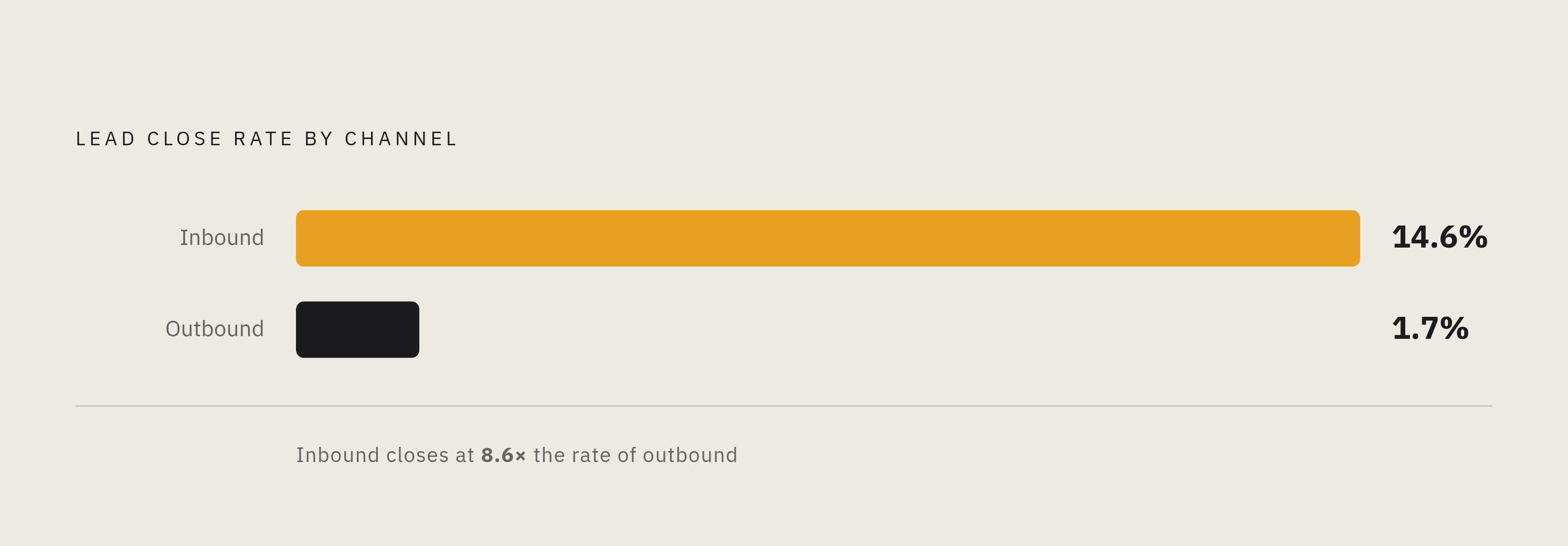
Reach the right buyer during that self-education window and you land on the shortlist before your sales team even knows the account exists. Compare that to outbound: HubSpot's numbers show inbound leads closing at 14.6%, outbound at 1.7%. Authority built quietly, before the call ever happens, converts at close to nine times the rate of a cold email about someone's "quick question." Not a knock on your SDRs, just the math working against them.
What lead scoring reveals about white paper intent signals
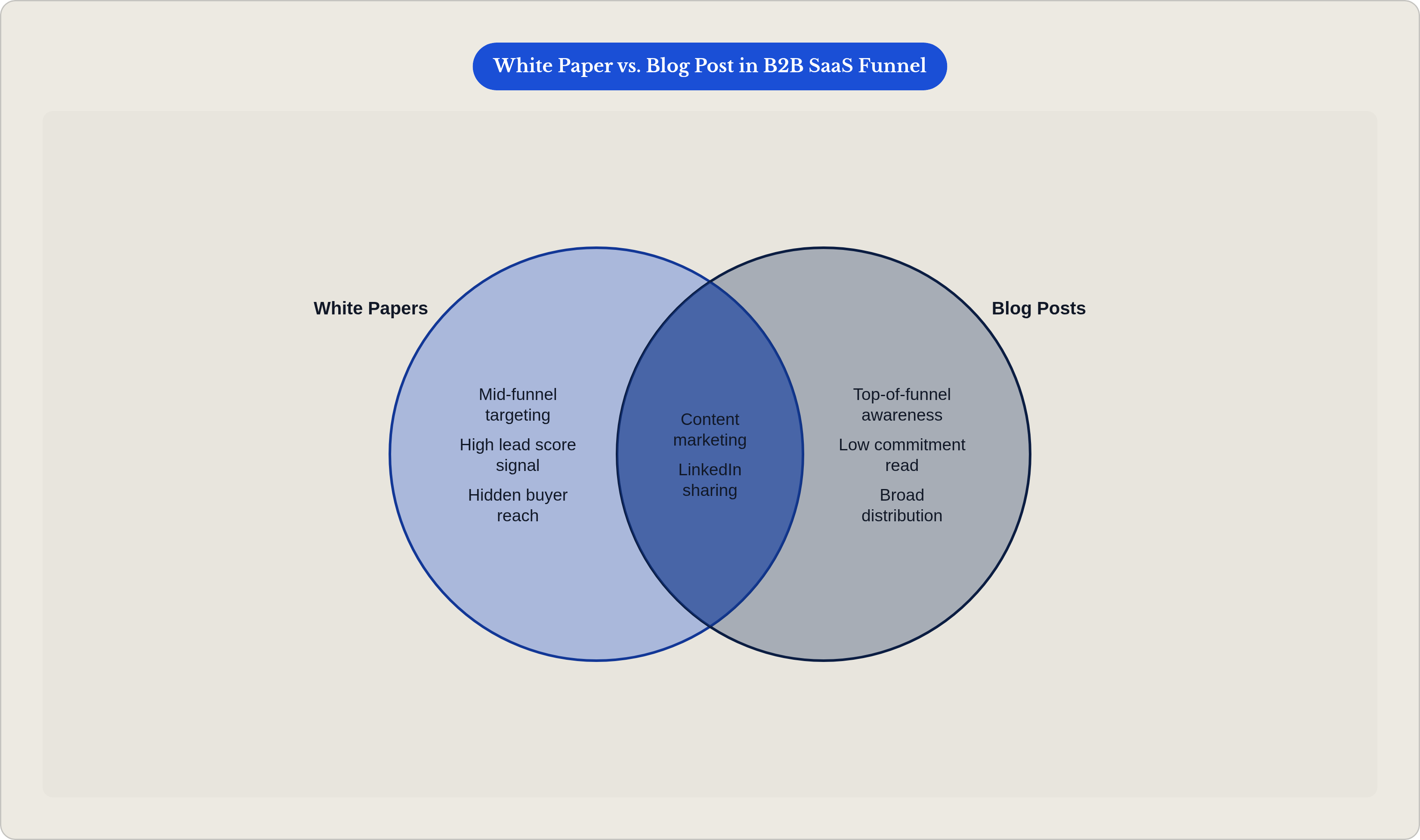
Ask any RevOps person which content type scores highest in their lead model. White paper downloads usually win, ahead of webinar registrations, ahead of blog subscribes. Makes sense once you think about it: reading a 12-page document on, say, SaaS security compliance takes real effort, and nobody stumbles into 12 pages by accident.
That effort is the signal, and it's a reliable one. Someone who downloads a data-heavy white paper is evaluating, not killing five minutes on a lunch break. In lead syndication programs especially, white papers pull in research-driven, mid-funnel leads who convert well when the follow-up actually matches their intent.
Matching the follow-up doesn't mean a generic drip sequence with the logo swapped in. It means emails written around the exact problem the paper addressed, sales handoffs that come with context (what they read, where they lingered), and messaging that extends the paper's argument instead of jumping straight to "want a demo?"
Most teams blow this part. They dump white paper leads into the same nurture track as someone who grabbed a five-point checklist off a landing page, same cadence, same templated emails, and ignore how differently those two people arrived at the site. One did homework, while the other clicked a listicle. Treat them the same and you waste the signal you worked to capture.
The gating decision that determines whether your white paper generates pipeline or noise
Every marketing team runs into the same fork. Gate the content and you capture contact info; leave it open and you maximize reach. Most teams pick a lane early and never look at the decision again.
Worth revisiting, though. G2's 2024 Buyer Behavior Report found 86% of B2B buyers would rather read educational content without filling out a form, and gated-asset conversion on cold traffic has slid to somewhere around 2% to 4%. The gate you're proud of mostly generates friction now, not leads.
Here's a newer wrinkle. Gated content gets cited far less by AI-powered search tools, since anything sitting behind a form is invisible to a crawler. A paper locked behind a form disappears from the layer where a growing share of research actually happens now. You wrote something good and hid it in a drawer nobody with a browser extension can open.
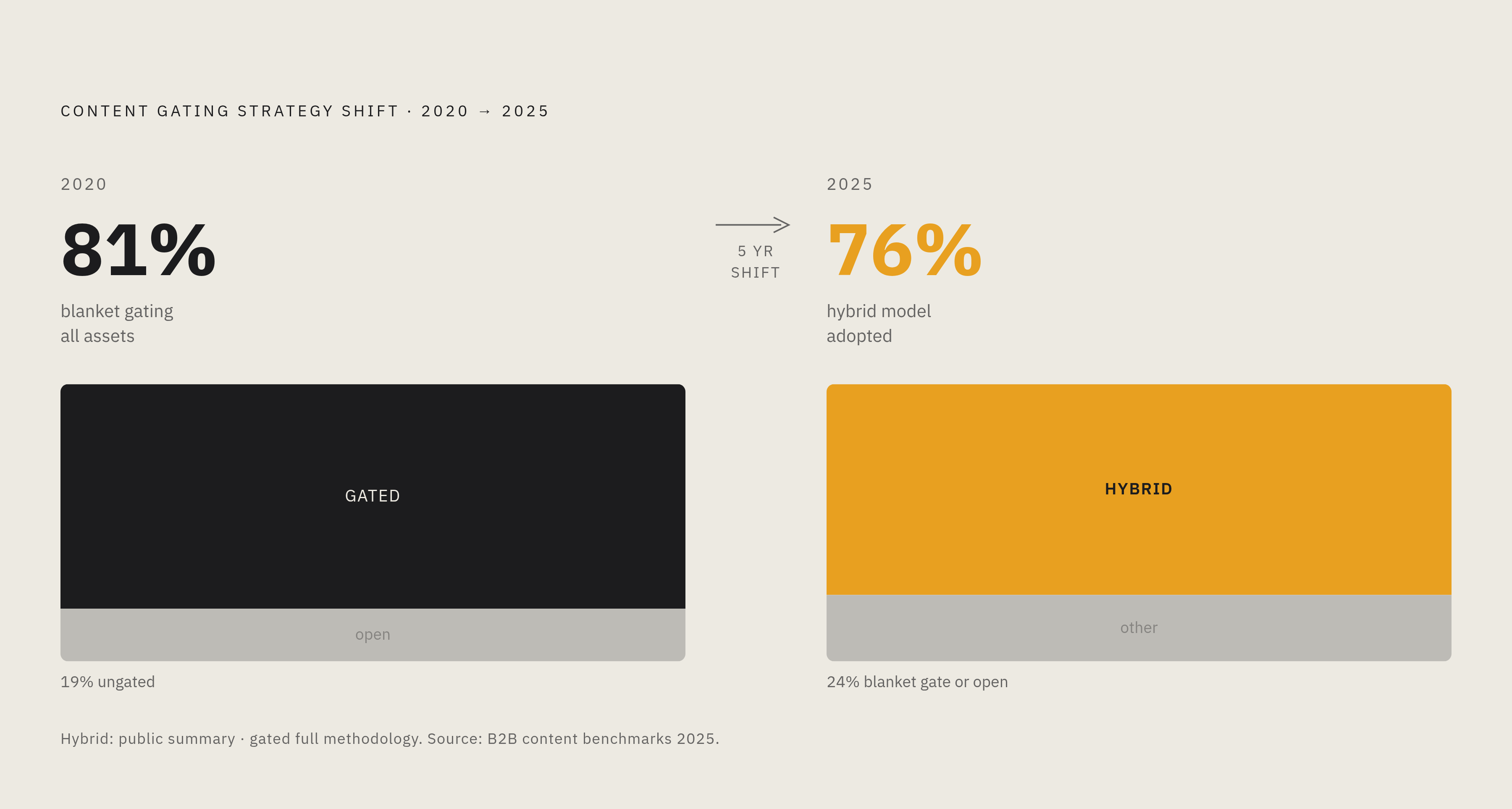
The fix most companies are landing on is a split structure: key findings, the infographic, and the executive summary stay public and indexable; the full methodology and raw data stay gated, since by that point the reader already got value and wants more. The Content Marketing Institute's 2025 Benchmark Study found 76% of B2B companies now run some version of this hybrid model, a real shift from 2020, when 81% of companies gated at least one asset without a second thought. Forrester's guidance has stayed consistent here for a while: gate later, and gate less. HubSpot found companies running a differentiated gating strategy see a 34% higher marketing qualification rate than teams running one blanket policy across everything they publish.
The rule that actually holds up: put the gate where the buyer has already gotten enough value to want more, well past the front door, never at it.
How white papers reach the buyers who are already evaluating
Here's the failure mode almost everyone hits. White paper gets published, press release goes out, PDF gets linked from the resources page, and then nothing happens. It's the white paper version of a tree falling in an empty forest, except this tree cost three weeks and a freelance writer's invoice to grow.
LinkedIn is where mid-funnel B2B buyers actually dig around. 97% of B2B marketers already use it for distribution, 89% credit it with generating leads, and it drives roughly 80% of all B2B social leads. It converts visitors at 2.74%, nearly triple any other platform out there.
Here's the part that trips people up. Personal profiles make up roughly 62% of what shows up in the LinkedIn feed, while company pages get around 5%, according to DSMN8's feed analysis. A white paper posted from a founder's personal profile reaches dramatically more of the right people than the same post from the company page, and personal profiles pull about eight times the engagement, too. Same PDF, same findings, wildly different reach depending on whose name sits above the post.
A few formats work consistently for founder-led distribution: a short thread pulling out the three most surprising findings, a carousel walking through the framework (carousels run around 6.6% engagement, best of any format on the platform), and direct messages to whoever commented, with the full document attached.
Each one keeps working long after launch day. Every derivative post resurfaces the paper to a slightly different slice of the audience, stretching its shelf life from one news cycle into several months.
What thought leadership actually does to a buyer's evaluation process
Edelman's 2025 B2B Thought Leadership Impact Report surveyed close to 2,000 professionals worldwide. One number stood out: 63% of "hidden buyers" (the finance, legal, compliance, and procurement people who never touch your demo but absolutely touch the contract) spend more than an hour a week reading thought leadership. That's close to the engagement level of your primary buyer contact, the person actually taking your calls.
These aren't passive readers, either. 81% say quality thought leadership helped them spot a challenge or opportunity they hadn't noticed before. A white paper circulating inside a buying committee reaches people who never filled out your form, and some of them carry more weight in the final decision than whoever actually downloaded it.
The RFP data backs this up. 79% of hidden buyers say they're more likely to advocate for a vendor during the RFP process if that vendor has a track record of solid thought leadership. Edelman's 2025 research also found over 40% of B2B deals stall from internal misalignment, so giving hidden buyers the right framing early is one of the few real levers against that kind of stall.
The 2024 Edelman-LinkedIn report adds one more thing worth sitting with: a large majority of C-suite executives said thought leadership content made them reconsider their current vendor. That's quiet, active displacement, with no sales rep anywhere in the room.
A white paper from a founder who already has a voice in the category lands differently than the same document from a name nobody recognizes. The thought leadership behind the PDF does the heavy lifting, not the PDF itself.
Building the white paper into a founder's LinkedIn content system
Stop treating the white paper like a one-time campaign. Treat it like an asset that keeps earning its keep for months through the content built around it.
One analysis of B2B SaaS companies that went from $0 to $5M ARR in Q1 2026 found 78% had founders actively posting on LinkedIn. Founder visibility and pipeline don't just correlate loosely here; they move together.
A real content system built around one paper stretches out over time. Pre-launch, posts surface the problem the paper addresses, building an audience primed to care before the findings even exist. Launch week brings the key-findings carousel, the "here's what surprised me" post, the contrarian take pulled straight from the data. Post-launch, quarterly callbacks to the framework show up whenever news or a customer conversation makes it relevant again, until the paper turns evergreen, the go-to reference every time the founder talks about that problem space.
LinkedIn's own sweet spot for substantive posting sits around two to three times a week, enough to stay visible without flooding the feed with filler. The platform's "depth score," introduced in late 2025, now weights time spent on a post, saves, and private shares over plain reactions. Derivative white paper content, the kind that gets saved or sent to a colleague, is exactly what that algorithm rewards.
A mix worth stealing: 60% problem-focused content on the category issue the paper investigates, 25% framework content on how the paper reframes that problem, 15% outcome content on what happened when a client applied the recommendations. One more tactic worth trying: bundle the white paper with two industry case studies, leave the case studies ungated, and put the form only on the white paper. Buyers get proof of value first, then decide whether the deeper document is worth their email address.
Measuring white paper contribution to pipeline, not just downloads
Download counts are easy. They fit on a slide, they go up and to the right, and they tell you almost nothing about whether the paper actually built pipeline. Counting downloads feels like measurement, but it's really just counting.
Real measurement connects the white paper to the CRM, not just the CMS. Worth tracking: which accounts that downloaded the paper turned into real opportunities, time-to-opportunity for white-paper-touched leads against leads in the same cohort who never touched it, and influenced pipeline, meaning deals where the paper showed up anywhere in the journey.
Tie this back to lead scoring. If your model weights white paper downloads as high-intent, that weighting should show up in closed-won analysis, too. High-score white paper leads should show up more often among deals you actually won, not just among the leads you generated and then forgot about.
On LinkedIn, the metrics that matter for distribution are saves, DM shares, and comment quality, not likes. Likes are confetti, while saves and shares map to the depth score, and to buyers who actually plan to come back to the document later.
There's a retention angle worth not missing, either. SaaS companies that keep producing educational content tend to see noticeably lower churn than the ones that stop, because a good white paper keeps re-educating the customers you already have while it works on acquiring new ones.
If a founder treats a white paper as a pipeline tool, they should be able to point to specific deals where the document showed up somewhere along the way. Revenue outcomes are the whole game, well past vanity metrics on a dashboard nobody in sales checks. A white paper built on real founder expertise, pushed through a personal LinkedIn presence, and measured against actual pipeline is one of the few mid-funnel tools left that can put you on a shortlist before your sales team makes a single call.