Why Most SaaS Company Narratives Reset at Every Funding Round
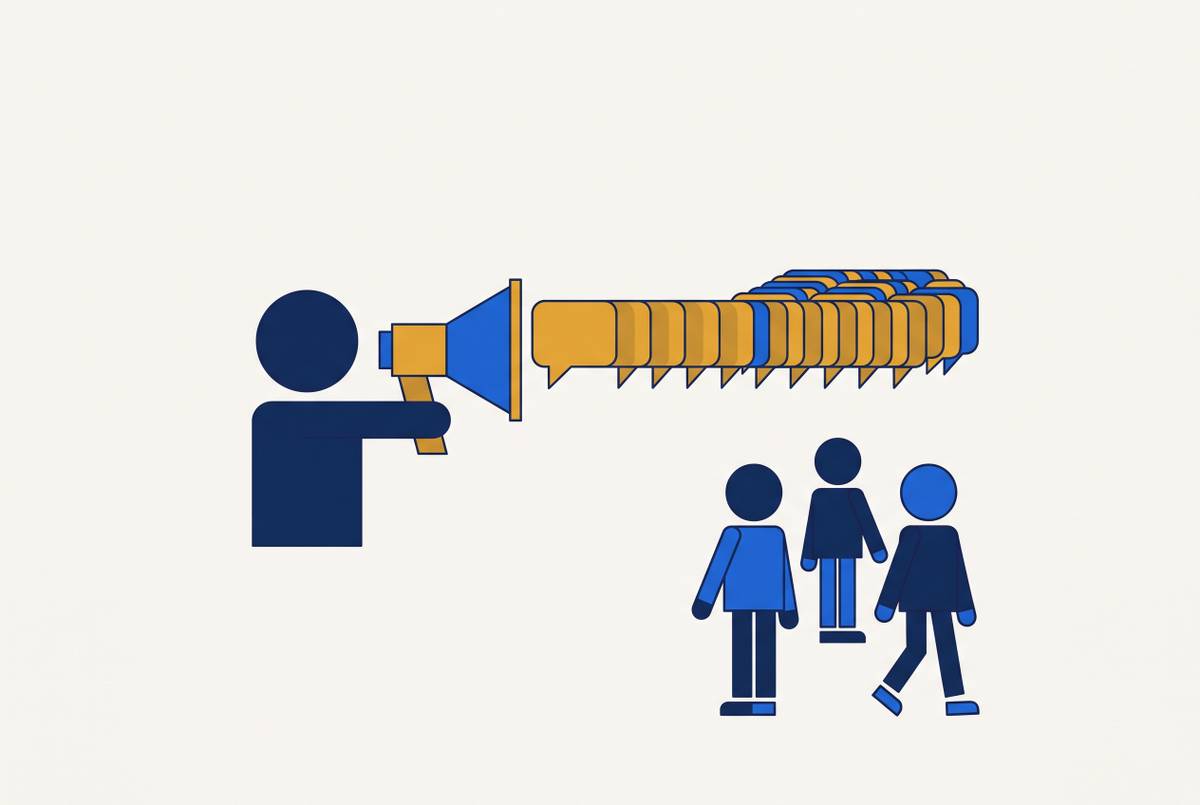
Most SaaS founders waste narrative power by rebuilding their story at every funding round.

The round closes, the champagne goes flat, and within a week someone on the team says the quiet part out loud: "Okay, now we need to update the messaging." That sentence is the whole problem in miniature. SaaS founders spend their company story down at every raise, the way they'd spend a slide deck, when it could instead earn interest the way a savings account does.
Why SaaS founders treat their company story as a pitch tool
Most SaaS founders rebuild their company narrative from scratch at every funding round. They picked up a mental model along the way that treats the story as a tool for the current raise, when it actually builds value the longer it stays intact.
Watching what founders actually optimize for makes the pattern obvious. It's the pitch deck. Slide count, language tuned to whichever investor is in the room that week, the whole thing tossed in a drawer the moment the wire hits the account. Each new round brings a new audience, too, a sharper tier of investor, a bigger enterprise buyer, a wider press list, and a bigger market claim than the last round could have supported. The instinct kicks in to rewrite the whole thing from scratch.
Seed-stage narrative is about the problem. Series A narrative pivots to early traction. Series B narrative jumps to category leadership or platform ambitions. Each version acts like the last one never happened, like it's an old software build getting deprecated the day the new one ships.
That's the exact habit that's wrong for this job. Product thinking works that way because version 1 really does get replaced by version 2, and nobody mourns the bugs. A company's story doesn't work like that. Its power comes from people recognizing it over time, from the same thread showing up at seed, at Series A, at Series B. Cutting that thread means you're not shipping an upgrade. You're starting a new company in everyone else's eyes, and nobody told them.
What the funding market now demands from a SaaS narrative
None of this is paranoia. The question investors are asking has genuinely changed, and founders aren't wrong to feel the pressure. The mistake is in how they answer it.
Funding has split into two very different markets. AI-foundational companies are pulling in massive rounds, while most other B2B SaaS companies are competing for a smaller, choosier pool of capital. Whatever was happening in 2021 isn't coming back for this group. Investors who used to bet on potential now want proof: ARR growth rate, net revenue retention, gross margin, numbers that need to clear a bar before anyone even listens to the story.
That's where most founders miss the actual gap. Metrics get a founder in the room. Story gets the founder the term sheet. Too many founders walk in talking about what the product does, feature by feature, instead of the problem it solves at scale, for a market investors can picture expanding. The hardest question in any crowded category right now is "why now," and resetting the story every round doesn't answer that question. It just postpones it to the next round, where it's even harder to answer convincingly.
Valuations have adjusted around this split too. Fewer deals are closing overall, but the AI-focused founders who do close are landing record prices. Non-AI B2B SaaS valuations have softened. The founders who still close strong rounds in that softer market are winning because their story is precise, consistent, and credible in a way the shakier pitches aren't.
How a narrative reset destroys category authority
Resetting the narrative doesn't give a company a clean slate. It costs something real: the slot the company already earned in a buyer's head, right at the moment buyers are quietly putting together their shortlist without ever picking up the phone.
That earned slot, call it category authority, takes months of showing up the same way, narrow and consistent, tied to outcomes buyers actually care about. It isn't something a founder can rebuild in a quarter just because the new deck looks sharper. And the buying decisions that matter most happen long before anyone from the company is even aware they're underway. Most B2B buyers do the bulk of their research before they ever talk to a salesperson, and by the time that conversation happens, the shortlist is usually already locked.
A narrative reset breaks the story exactly where that invisible research happens: old LinkedIn posts that don't match the new positioning, review sites with outdated language, analyst notes referencing a category the company has since abandoned, peer recommendations in private messaging channels that still describe the old pitch. None of that updates the day the new deck goes live.
Picture a buyer mid-research, pulling together everything they can find on a vendor, and running straight into a company that sounds like two different businesses depending on which page they land on. That's the company that gets described badly, or worse, doesn't get mentioned at all, when a peer group or an AI assistant tries to sum it up. A growing share of B2B buyers now start that research inside an AI chatbot instead of a search engine, and a chatbot has no patience for contradictory signals. It just picks the version that's cleaner and clearer, and if that's a competitor's story instead of yours, the deal was lost before anyone on the sales team knew it existed.
Most of that influence runs through channels no dashboard tracks: buyers researching on their own, peers recommending vendors in private conversations, all of it shaping the shortlist long before any "known" touchpoint gets logged. When the narrative resets, all of that quiet influence resets with it, and there's no report anywhere showing what got lost.
Founders will object, reasonably, that the company genuinely changed and the story had to change with it. The fix is a structure built to absorb change without losing the thread, not a blank page.
What narrative architecture means in practice
A narrative architecture is a structure with layers that sits between one fixed story and a refresh every few quarters: one part stays fixed, and the rest scales with the company.
Three layers separate clearly: the origin claim covers why the problem exists and why this founder, specifically, is the one solving it. This layer stays fixed, round after round, as the center everything else orbits, the thing a buyer or investor can recognize three years later even if nothing else about the pitch looks the same.
The proof layer holds the evidence: customer outcomes, retention numbers, category signals. This layer changes constantly, and it's where the investor-specific metrics and language can live without leaking into the broader market-facing story and making it feel like a pitch deck wearing a trench coat.
The ambition layer is the scope of the claim itself, how big the market is, whether the company frames itself as a point solution or a platform. This layer is supposed to grow with each round. Gong is a useful illustration here. Gong's own Series C press release, from December 2019, already describes the company as "the revenue intelligence platform." Gong's CMO has said the shift from "Conversation Intelligence" to "Revenue Intelligence" happened on October 8, 2019, before that Series C round, not at a later stage. The ambition expanded, but it expanded on top of a claim that was already there. That marks the growth, not a replacement.
A messaging refresh changes the words. A narrative architecture changes the scope while the load-bearing structure underneath stays put. A buyer who's followed a founder for 18 months should feel like the company grew up. They shouldn't feel like they're meeting a stranger wearing the old company's name tag.
There's a simple test for whether a founder actually has an architecture or just a current pitch. Can the founder explain, in two sentences, how the story told at seed led logically to the story being told now? If the answer takes a long pause and a few false starts, the narrative wasn't evolved. It was replaced, and the founder just hasn't noticed yet.
The Founder's Personal Voice as the Surface Where Narrative Continuity Survives a Funding Round
Company pages reset constantly because they're treated as brand assets, updated the moment marketing decides the old tagline doesn't fit anymore. A founder's personal voice doesn't reset the same way, because it belongs to a person, and a person's credibility builds up on its own timeline, independent of whatever the company's funding calendar is doing.
Every time a round closes, the company page gets a new tagline, a new hero claim, new positioning copy.
A founder's LinkedIn profile runs on a completely different clock. People who follow a founder built trust in a person, not a logo, and that trust doesn't disappear the moment the company's official language changes. Personal LinkedIn accounts pull in meaningfully more impressions than company pages do, and replies to founder posts convert at a far higher rate than cold outbound ever does. That gap exists for a simple reason: people trust other people more than they trust brands, and no amount of clever positioning copy changes that.
Founder-led content is what keeps the origin claim visible, round after round. A founder can reference where the company started, show how the current chapter grew out of the last one, and give the market a through-line that a press release or a website redesign simply can't carry.
The failure appears when a founder hands LinkedIn off to a marketer who turns out polished, corporate-sounding posts. Engagement flattens, the personal voice disappears into brand-speak, and the one channel that was supposed to carry the story through the next round goes quiet right when the company needs it most.
Building a LinkedIn content program that holds the narrative across funding stages
Narrative continuity on LinkedIn doesn't come from posting constantly; it comes from a consistent structure in which the founder constantly returns to the same origin claim, updates the proof underneath it each time, and builds authority that compounds instead of resetting every few months.
A handful of formats carry most of that weight for B2B SaaS founders. Personal stories tied to a business lesson tend to get the highest engagement, and they're the easiest way to keep the origin story alive without it reading like a company announcement. Sharp, specific opinions about the industry, the kind that stake out a clear position and repeat it consistently, build real authority over time, while safe, generic posts that avoid saying anything get ignored and build nothing. Original observations and customer outcome stories carry the proof layer of the architecture, and they should keep updating to reflect the company's current stage without ever erasing earlier chapters. Document carousels work well for laying out a structured argument, walking a reader through the founder's view of the category step by step.
On cadence: three to five posts a week is the range that works for most founders. Starting that habit well before a raise gives investors a visible track record to look through once the conversation starts. Starting it the week of the pitch leaves nothing to show them yet.
Every content series should tie back to the origin claim: what the company solves, why it matters, why this founder is the one solving it. Do that consistently, and a new follower who shows up mid-Series B can piece together the whole arc without ever seeing the pitch deck.
The investor audience and the buyer audience aren't separate problems here. The same LinkedIn program that earns buyer trust also builds investor familiarity, same content, two different audiences, two different outcomes (pipeline on one side, checks on the other) landing on two different timelines.
The one thing to avoid is turning the feed into an announcement channel, funding news, product launches, press mentions, and nothing else. Announcement content resets the narrative every time it posts. Thinking content, the founder's actual point of view, is what compounds. Twelve to eighteen months of that consistency builds a kind of authority a reset can't fake and a competitor can't buy. The founder who starts that habit now is quietly claiming the next buying cycle before anyone else even knows it has opened.