ABM Strategy vs Account-Based Awareness and Why the Difference Matters
Most B2B teams run awareness campaigns under the ABM label.
Most B2B SaaS teams think they're running ABM. The difference sounds like semantics until it appears in a pipeline review, and by then it's an expensive lesson in vocabulary.
What ABM means: named accounts, not audience segments
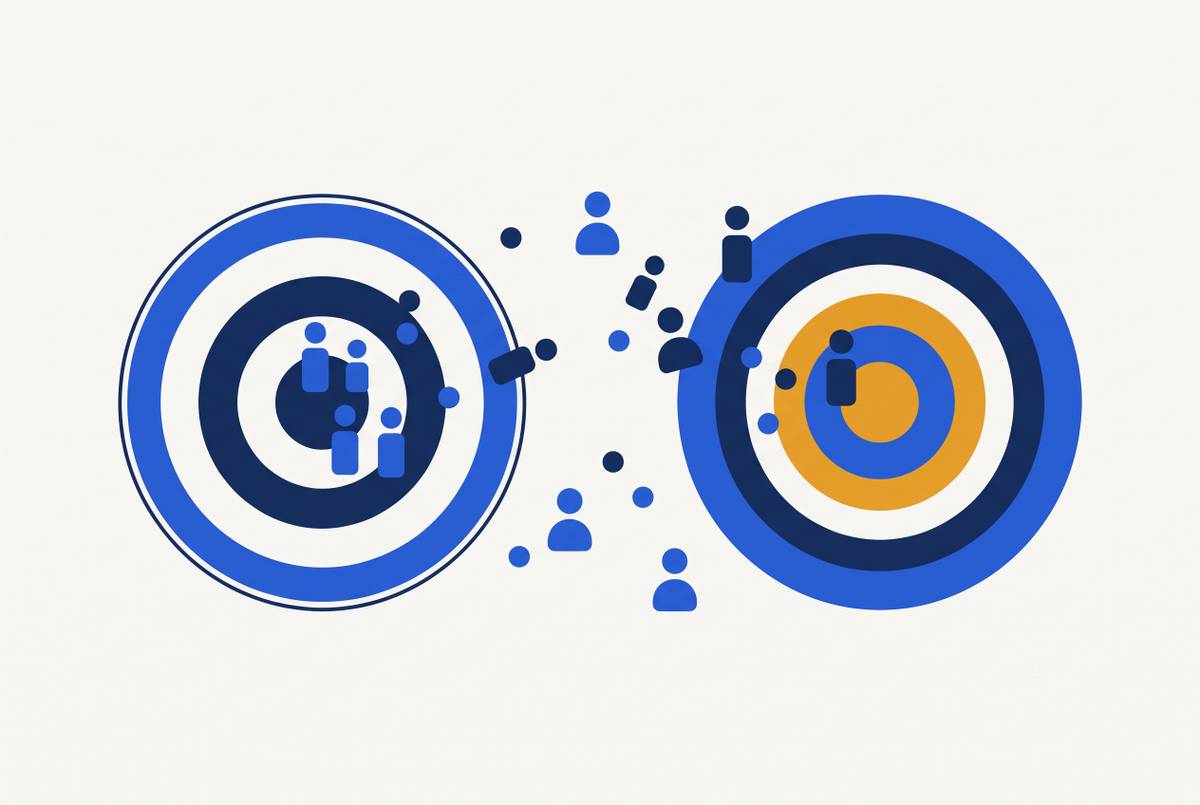
Real ABM treats each target company as a market of one. Not a segment, not a lookalike audience, one specific company with a name, a org chart, and a reason it made the list.
Traditional lead gen starts wide and narrows down through qualification. ABM flips that funnel entirely: qualify first, pick the accounts, then build campaigns around them. That inversion is the whole point, and most teams quietly skip it.
There are three tiers of execution. One-to-Few clusters accounts by shared traits (industry, size, tech stack) into a mid-size list with segment-specific campaigns. One-to-Many goes programmatic, hundreds of accounts, lighter personalization, closer to demand gen but still scoped to named companies rather than a lookalike audience.
Sales and marketing work off the exact same named account list. Not similar lists. Not "aligned in spirit." The same list, with both teams accountable to it. Skip that, and none of the three tiers qualifies as ABM, no matter how personalized the emails look.
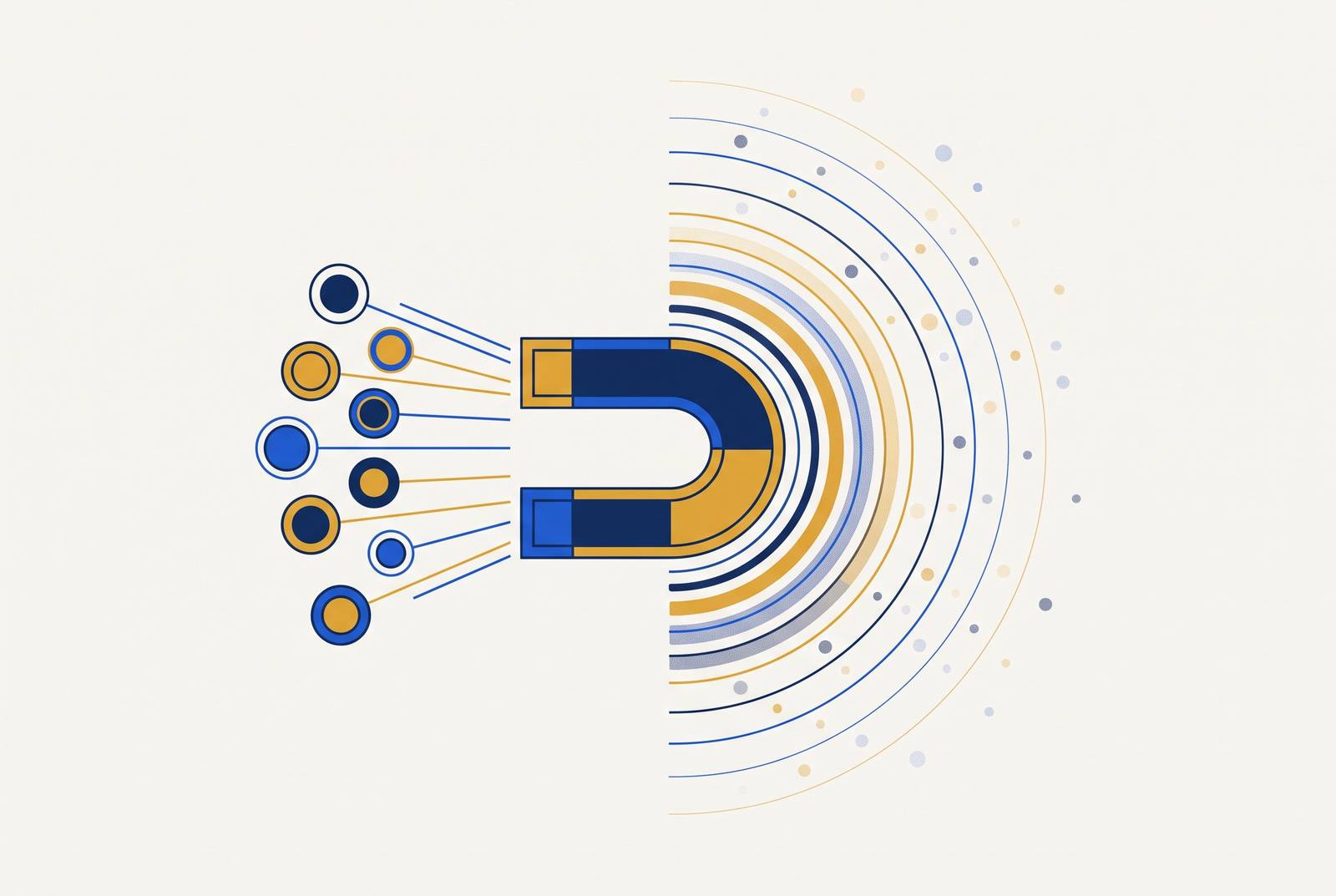
What doesn't count: ICP-lookalike audiences on LinkedIn or Meta, category keyword search, content aimed at "companies like our best customers". Those tactics reach audiences. They don't reach accounts. That distinction, named accounts versus matching audiences, is the vocabulary the rest of this piece leans on. One-to-One targeting delivers deep personalization for a small account set of roughly 10–50, marked by high existing-customer overlap, custom microsites, and executive meetings.
Why 87% adoption does not mean 87% execution
According to Demand Gen Report's ABM Benchmark Survey, 87% of B2B marketing teams now run some kind of ABM program, a jump from 54% just five years earlier that measures something narrower than it sounds. That's a startling jump. It's also a number that measures something narrower than it sounds.
Adoption rate counts self-reported programs. It says nothing about execution quality or precision.
Most teams wearing the ABM badge are actually running what amounts to TAM awareness: lookalike audiences, category keywords, ICP-broad content, dressed up with a strategic-sounding name. Meanwhile the real motion, named accounts, personalized engagement, multi-threaded sales coordination, sits skipped in the corner.
Why does this keep happening? Because TAM awareness is simply easier. Easier to launch, easier to attribute at the impression level, and it feels account-based because the targeting starts with an ICP filter. The filter gives a program the vocabulary of ABM without the infrastructure that produces real account-based execution.
The clearest sign of the gap: per Gartner research cited in the sources, only 17% of companies can accurately trace pipeline back to ABM investment. Which means the vast majority of programs aren't wired to connect account engagement to revenue. If most "ABM" is running on awareness rather than precision, the next question writes itself: what exactly is missing? If most programs are actually running awareness under the ABM label, the question becomes (what exactly are they missing?)..
The four structural gaps between awareness and true ABM
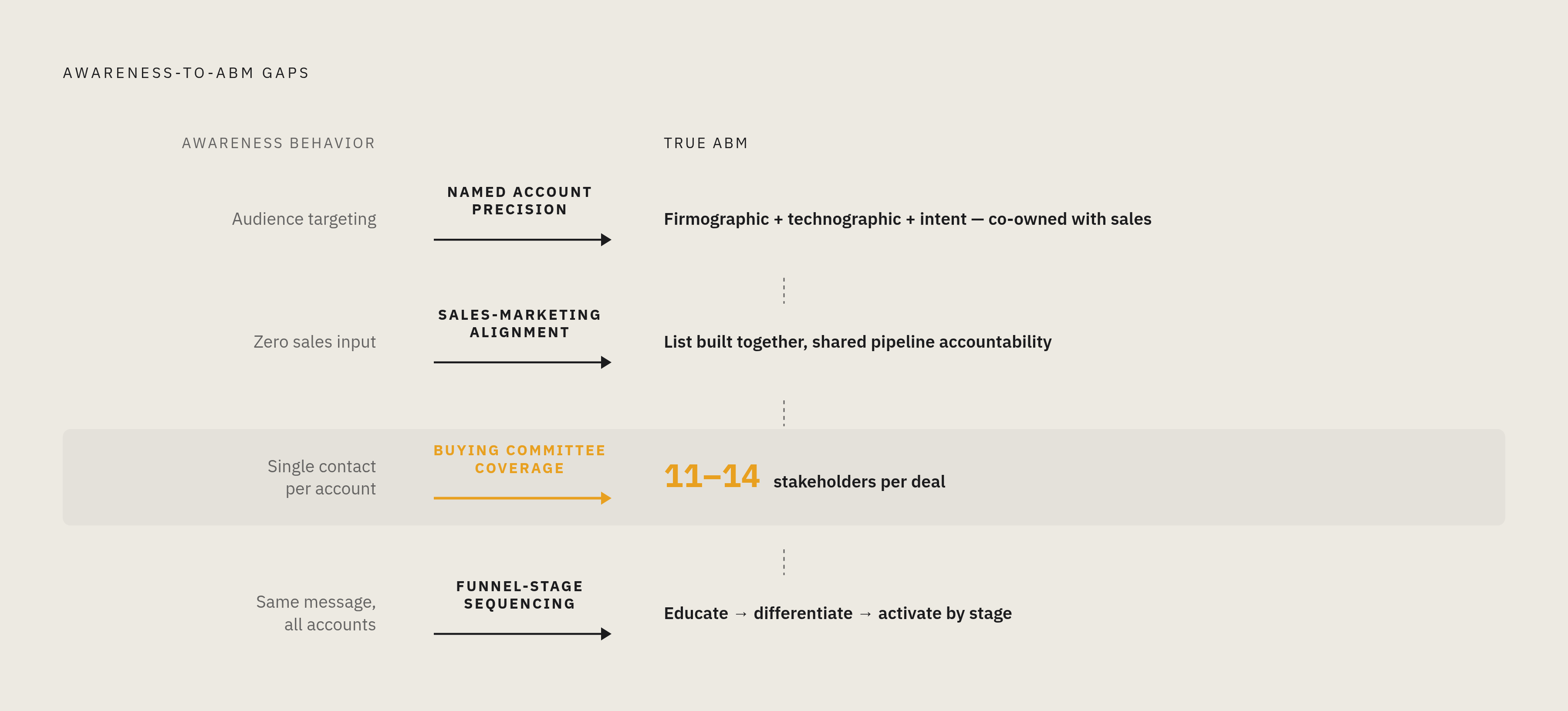
Four gaps separate the two, and they appear in that order pretty reliably.
The first is named account precision. Awareness campaigns target audience segments matching ICP attributes. ABM targets companies by name, enriched with firmographic, technographic, and intent data, on a list Sales actually co-owns and works.
The second is sales-marketing alignment at the account level. ABM requires both teams to build the target list together, agree on who does what and when, and share accountability for the pipeline those accounts produce. Awareness campaigns usually run with zero sales input on which accounts even matter.
The third is buying committee coverage, and the numbers here reveal a structural problem. A campaign built for one contact or one persona is structurally too small for that math, no matter how well-written the copy is.
The fourth is funnel-stage sequencing. Awareness sends the same message to every account regardless of where they are in the process. ABM sequences differently by stage: education early, competitive differentiation in the middle, then activation campaigns and executive "air cover" once intent spikes. Air cover, in practice, means ads that build recognition before the sales call happens, so the prospect meets the outreach as a familiar name instead of a cold one. Gartner's 2025 B2B Advertising Outlook found meeting-driven offers and account-level retargeting are the strongest tools for keeping that engagement alive between human touches.
A program can run all four of these as pure awareness activities and still get called ABM, because the ICP filter is technically present. The filter is necessary. It just isn't sufficient, and treating it as the whole job is where most programs quietly stall. Salesforce's State of Marketing Report (Tenth Edition) states B2B deals now involve an average of 11 stakeholders, each consuming 5–7 assets before engaging sales, and ZoomInfo's framework states enterprise buying decisions routinely involve 14 or more stakeholders, meaning single-contact or single-persona awareness campaigns are structurally insufficient for Gap 3 (Buying committee coverage), as detailed in ABM Strategy: A Step-by-Step Framework for 2026.
The buying committee as the unit of measure
The ABM Leadership Alliance reports 76% of marketers see higher ROI from ABM than from any other strategy, and the mechanism behind that number is buying committee engagement, not individual lead capture N.Rich. The lead itself matters less than the room full of people it has to convince.
Finance, legal, compliance, procurement, and operations hold real veto power and have barely any contact with sales. Awareness campaigns built around visible decision-makers miss exactly the people who can quietly kill a deal in a hallway conversation nobody sees.
The 2025 Edelman-LinkedIn B2B Thought Leadership Impact Report found more than 40% of B2B deals stall because of internal misalignment inside the buying group, driven by these hidden stakeholders Account-Based Marketing (ABM): The Complete 2026 Guide Martal Group. It's nearly half of stalled deals, sunk by people the marketing team never targeted.
Which means each role needs its own message. The economic buyer, the technical evaluator, the user champion, the compliance blocker, none of them respond to the same ICP-targeted asset. Directive's framework lays this out: CFO messaging leans on ROI and compliance, CISO messaging covers integrations, security, and risk reduction, VP of Operations messaging centers on usability. These are the same named account viewed through different roles. They're different people inside the same named account, all needing to reach consensus before a deal moves.
That's the logic behind the shift from Marketing Qualified Leads to Marketing Qualified Accounts. What matters is not how many people got reached, but whether enough of the right people inside one specific company got engaged to move the deal.
Where account-based awareness belongs in a well-built ABM system
None of this makes awareness the villain. The research is explicit that both motions need to run at the same time. Calling awareness bad is wrong. Calling it sufficient on its own is the actual mistake.
TAM awareness earns its keep in a few specific ways. It builds pre-funnel brand recognition that makes named-account outreach land warmer instead of colder. It identifies accounts showing early intent before they've even made it onto a named target account list. And it builds familiarity in places sales can't reach directly: dark social, peer Slack groups, LinkedIn DMs, where buying decisions start forming long before anyone books a call.
That dark social layer matters more than most dashboards admit. Buyers build shortlists through peer channels, private communities, and increasingly AI-assisted research, and this stage runs on awareness, not sales activity. 6sense's research found 92% of B2B buyers start their journey with at least one vendor already in mind. Whoever built awareness months earlier is often the reason that name is already on the list.
So the test isn't whether awareness reaches wide. It's whether it reaches the right accounts at the right stage. Awareness that hits the wrong companies is waste; awareness that warms accounts your named-account motion is already working is acceleration. If a program runs awareness campaigns but has no named account list that sales co-owns and actively works, it's running one motion, and it's the less precise one. What TAM awareness legitimately accomplishes:.
The attribution problem that makes most ABM programs look like they're working
That 17% figure deserves a second look, because it flips the framing entirely: if only 17% of companies can accurately attribute pipeline to ABM investment, that means 83% are measuring something else and calling it pipeline.
What are they measuring instead? Website traffic lift, impression counts, MQL volume, the exact metrics awareness campaigns produce in abundance. These numbers move easily and look like progress on a slide. They just don't connect to what happened inside any specific named account.
The sources show 42% of businesses call measuring ABM effectiveness a serious hurdle, and fewer than a third can link a sales lead back to the specific content piece that influenced it. Some of that is a data problem, and some of it is a dark social problem. When a CFO shares a piece of content in a private Slack channel and colleagues click through, every one of those visits records as direct traffic. The awareness campaign did its job invisibly. The dashboard gives it zero credit, and zero blame, either way.
The real fix requires stitching together first ad impression, content consumption, website behavior, outreach engagement, meeting booked, and closed-won, all at the account level, not the audience level. Skip that stitching, and a team can't tell account-level engagement from generic reach, which means it can't diagnose why the program isn't converting. So it optimizes for the numbers it can actually see, which are, again, the awareness numbers. It's a closed loop that feels like progress and produces very little of it.
Operational requirements of a genuine ABM program to generate pipeline
Start with the list, not the campaign. ICP is a filter for building the list, not an audience to advertise to. The list needs named companies, tiered by fit, intent, and timing, co-owned by sales and marketing, refreshed on a regular cadence as intent signals shift.
Tiers set the resourcing. Custom research, executive briefings, dedicated microsites, and one-to-one outreach go to Tier 1, reserved for accounts big enough to justify that spend. Tier 2 gets industry-specific assets and segment campaigns with direct sales coordination. Tier 3 runs programmatic personalization, closer to demand gen, but still scoped to named accounts rather than lookalike audiences.
None of that works without an actual operating model between sales and marketing: shared target account criteria, agreed engagement plays that spell out who does what and when, shared pipeline metrics instead of MQLs, and regular account review meetings, not a single kickoff that everyone quietly forgets. Directive's framework tracks buying group coverage rate (engaged contacts divided by required roles per tier) as more predictive of deal movement than any awareness metric on the board.
Intent data only matters if someone acts on it fast. The real question isn't how to get intent signals, it's how quickly a team can turn a signal into an account-level response instead of just another row on a spreadsheet.
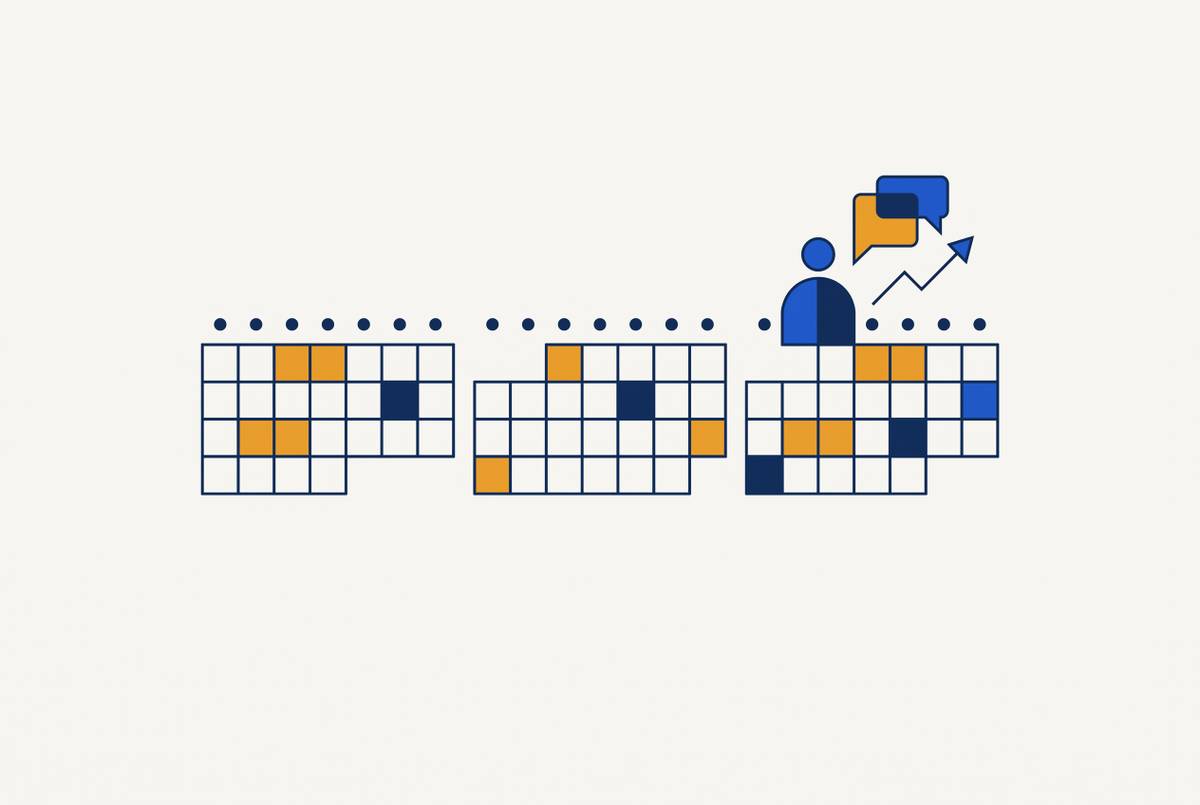
And patience is part of the operating model too. Meaningful pipeline appears at roughly 6 to 9 months, with full ROI visible at 9 to 12 months. Judge that on a quarterly demand-gen calendar, and the program will look like a failure right up until the moment it isn't. The sources identify tool bloat, a shared Salesforce instance mistaken for real alignment, and awareness campaigns running under the ABM label with no named-account follow-through behind them as what actually kills ABM programs.
Founder-led LinkedIn content as the awareness layer ABM programs need
Buying committees build their shortlists in feeds, peer channels, and AI-assisted research, long before a sales rep ever gets a reply. Showing up there requires something that reads like real expertise, not a company account posting a stock photo with a caption.
Personal LinkedIn accounts consistently outperform company pages for this job, and the reason isn't the algorithm, it's trust. People trust people before they trust logos. That single fact reshapes where the awareness budget should actually go.
It also happens to solve the hidden buyer issue from earlier. Those stakeholders responsible for 40% of stalled deals, finance, legal, compliance, follow industry voices on LinkedIn long before they show up in any sales pipeline. Founder content reaches them precisely because it isn't trying to sell them anything yet.
There's a quality bar here too, and it cuts both ways. Momentum ITSMA's Value of Thought Leadership study, surveying 600 senior decision-makers, found 66% of buyers won't work with a provider whose thought leadership is weak. A founder who shows up with sharp, specific opinions pre-qualifies the account before sales ever makes contact. A founder who posts generic filler does the opposite.
This is the air cover mechanism from earlier, just built through organic authority instead of paid impressions. Founder content that names the exact problems target accounts are facing creates recognition later, so named-account outreach lands on a face people already half-know. The companies winning inbound heading into 2026 are doing it through the founder's voice, not the company page, and that voice becomes the primary distribution channel for the awareness motion that makes named-account ABM actually work Account-Based Marketing (ABM): The Complete 2026 Guide. Opinionated, specific content from a recognizable person builds the shortlist presence that ABM then converts into pipeline.
The practical test for whether your program is ABM or account-based awareness
Can every account currently being targeted actually be named, out loud, company by company, not described as an ICP profile? Does sales co-own that list and actively work it, or does sales just receive MQLs that happen to come from ICP-matching companies? Is content sequenced by funnel stage and buying role per tier, or does everyone who fits the ICP get the same asset? Can engagement be traced at the account level, stakeholder by stakeholder, mapped to deal progression, or do the metrics stop cold at impressions and traffic? Is there a defined time horizon of at least 6 to 9 months for pipeline impact, or is the program judged on the same quarterly clock as demand gen?
Answer "no" or "not really" to more than two, and the honest label is account-based awareness. Possibly valuable. Just not ABM, and not built to deliver the pipeline ROI that label implies.
The fix runs in a specific order. Start with the best existing customers, the ones with the strongest retention, expansion, and contract value, and use them to model the ICP. Turn that model into a named account list. Get sales to co-own it before a single campaign launches. Then build content and sequencing around that list, never the reverse.
Awareness doesn't disappear from this picture. It runs alongside the named-account motion, warming the wider market while precision targeting drives the actual pipeline, a parallel track rather than a substitute. Companies that build the most consistent, credible voice in their category, often through a founder who actually shows up and says something, shorten the distance between that awareness and the pipeline it's supposed to feed. Five questions that separate the two:.
Sources
- Account-Based Marketing (ABM): The Complete 2026 Guide
- Building a Modern Account-Based Marketing Strategy for 2026 - Directive
- ABM Strategy: A Step-by-Step Framework for 2026
- What is ABM and Why Does It Matter in 2025?
- ABM vs ABX 2026 Guide: Boost B2B Growth with the Right Strategy
- 2026 Account Based Marketing (ABM) Benchmark Survey Findings: ABM Moves Beyond Pilot Stage, With AI Powering Smarter Execution - Demand Gen Report
- The Complete Guide to ABM Strategy: Frameworks for Success | 6sense