How to Turn a LinkedIn Post Into a Sales Conversation Without a CTA
Let buyers self-identify in comments instead of chasing them with a CTA.
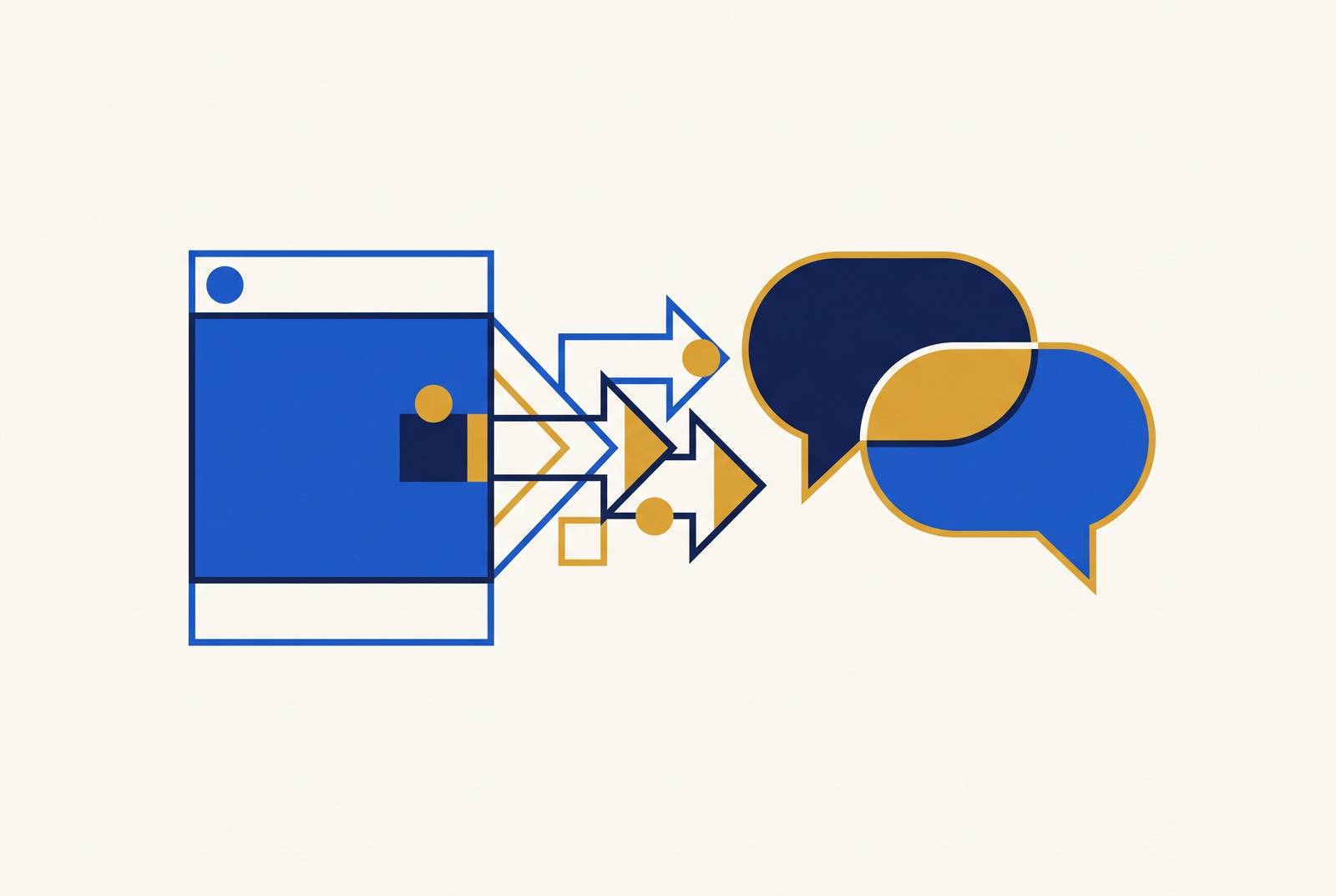
Most founders end every LinkedIn post the same way: "DM me," "book a call," "link in comments." It feels productive. It also tanks reach, reads like an ad, and skips right past the buyers who were actually paying attention. The posts that generate real sales conversations do it backwards: no ask in the post at all, just something specific enough that the right person outs themselves in the comments.
That's the whole mechanic this piece is going to unpack. Not a hack, not a growth trick. Just how attention actually converts to pipeline when nobody's asking for it directly.
A post with 50,000 impressions and zero DMs is a worse outcome than a post with 2,000 impressions and three real sales conversations. That's not a typo, and it's not a consolation prize for founders with small audiences. Analysis of solo founder accounts found that none, not one, of the high-converting posts actually sold anything in the post body. The post's job is to earn attention. The DM or the bio does the converting. Removing the CTA from the post means moving the ask, not removing it: first comment, banner, bio link, same door, different hallway. It means moving it: first comment, banner, bio link. Same door, different hallway.
How B2B buyers make decisions before vendor contact
The math is uncomfortable for anyone still measuring success by contact form submissions: per the 6sense 2025 B2B Buyer Experience Report, buyers complete 61% of their journey before they ever contact a supplier. And roughly 80% of deals go to whoever was already on the shortlist on Day One of that process. By the time someone fills out a "Contact Sales" form, the decision is basically made. A CTA at that stage isn't persuasion, it's paperwork.
Complicating things further, the buying committee has ballooned. A typical B2B purchase now runs through a buying committee of multiple stakeholders, each one doing their own quiet research, mostly without telling the vendor anything.
Then there's dark social, which sounds like a comic-book villain but is really just a colleague from procurement forwarding a founder's post into a Slack channel. That share is not visible in an analytics dashboard, because dark social sharing, like a colleague forwarding a founder's post into a Slack channel, leaves no trace there. No like, no comment, no attribution. But it's one of the highest-intent actions a buyer can take, and the content types that tend to get privately shared most, research reports, competitive breakdowns, executive thought leadership, are exactly the posts with no CTA attached.
Layer AI on top of that. A large majority of B2B buyers, 94% according to recent data, now use LLMs somewhere in their research process. That's a second invisible evaluation layer running in parallel to the human one, and it tends to favor founders who sound consistent and quotable over founders who sound like a landing page.
Putting it together, the takeaway is simple, if a little unsettling: the post published today is doing work on buyers who won't show up in an inbox for weeks, maybe months. Optimizing for an immediate click is optimizing for the wrong moment.
The founder profile's role in reaching buyers before intent
Company pages on LinkedIn are, functionally, billboards nobody reads on purpose. Widely cited 2025-2026 benchmark data puts personal profiles at 561% more reach than company pages for equivalent content. Feed analysis found personal profiles make up around 62% of what shows up in a user's feed, versus about 5% for company pages. The platform was built for people, and it treats brand accounts like the guy at the party who only talks about his job.
The algorithm rewards topic consistency, real comments, and peer relevance, three things a company logo cannot generate no matter how good the graphic design team is. A company page announces things. A founder interprets them. And buyers quietly sizing up a purchase aren't hunting for a product description, they're trying to figure out whether the human behind the product actually gets their world or is just repeating a category buzzword deck.
The numbers back this up from both directions. The Edelman-LinkedIn B2B Thought Leadership Impact Report found that 55% of hidden decision-makers, the ones who never engage directly with a vendor, still use thought leadership content to vet a company before anyone official talks to them. Research has found that a majority of B2B buyers say a founder's thought leadership directly influences their purchase decision.
Which sharpens the no-CTA logic considerably. A post that reads like an ad gets scrolled past by exactly the buyers doing quiet due diligence. A post that reads like a real opinion gets forwarded into the buying committee's group chat.
The specific post mechanics that cause buyers to self-identify
There's a measurable signal buried in the engagement data, and it's not likes. Draper's analysis found that high-converting posts consistently carry a comment-to-like ratio above 0.5. Likes are a shrug. Comments are a raised hand.
Justin Welsh's post about being "willing to look stupid for a decade" pulled 5,900 likes and 1,300 comments, no CTA anywhere in the body. Inbound got redirected through his profile and off-post channels. Alicja Smin ran a post asking how a LinkedIn beginner could possibly compete, 2,300 likes, 1,400 comments, because the question named the exact anxiety the reader was already sitting with. People don't reply to confirm they read something. They reply to say "that's me."
Every one of these posts shares a pattern: a specific number tied to a real result, one clean sentence as a hook, and zero selling in the body. This approach can be called the credibility-anchor mechanic, and it works like this:
Pick the single biggest result available, with a real number attached. "$70K in a month" (Samuel Szuchan). "$100M in pipeline" (Luke Shalom). "$15M one-person business" (Justin Welsh). Specificity forces the reader to run the math against their own situation, and that little bit of mental arithmetic is what turns into a DM. Write one sentence to hook attention, tell the story behind the number, and leave the rest of the post completely clean of any ask. The CTA lives in the bio, the banner, or the first comment, never suppressed, just kept separate.
Szuchan's quietest and most effective posts have nothing to do with his ghostwriting agency on the surface. He'll post a surprising stat and let the reader connect it to marketing themselves. He never looks like he's selling, which is precisely what makes him look like someone who understands the market better than the person actually pitching.
The underlying mechanic is identification, plain and simple. A reader sees a real number tied to a real outcome and asks, silently, "could that be me?" The DM is just that question, answered out loud. Contrarian posts run the same play from a different angle: the Edelman-LinkedIn report found that 86% of decision-makers actually prefer ideas that challenge what they already believe. A well-placed contrarian take surfaces the readers who half-agree already and want confirmation from whoever said it first.
How the 2025-2026 LinkedIn algorithm rewards this content
The current algorithm cares about dwell time, meaningful comments, topic consistency, and how relevant a post is to someone's actual network. Trust-first content generates all four. Promotional content tanks all four. That's not a coincidence, it's basically the whole design.
Richard van der Blom's 2025 research found organic views down 50% year-on-year across the platform, but engagement per post also down significantly. Fewer eyeballs, deeper attention from the ones that stick around. Posts that spark real conversation stay alive in feeds for weeks rather than hours, based on observed 2026 platform behavior. A no-CTA post that earns genuine comments keeps compounding long after the initial publish window closes.
Topic consistency plays a bigger role than most founders assume. The algorithm rewards topically consistent content by surfacing it to users interested in that subject, including outside the founder's existing network. Out-of-network discovery, in other words, is basically reserved for content that reads like expertise. Advertising doesn't get invited to that party.
LinkedIn's own B2B Institute puts a number on timing: roughly 95% of potential buyers aren't in an active buying window at any given moment. Promotional content is invisible to that group, because it's asking for something they're not ready to give. Insight content keeps a founder present in their feed through the long stretch before intent ever shows up.
Format affects engagement rate directly. Carousels uploaded as PDFs carry the highest engagement rate of any format on the platform, around 6.60%. The swipe mechanic itself generates dwell time, every swipe counts as a signal, and the format naturally supports a full argument instead of forcing a hook-and-CTA shortcut.
Net result: a founder posting trust-first content three or four times a week outperforms one posting daily promos, both in reach and in the quality of who's engaging. And the algorithm hands that extended reach specifically to buyers sitting in the invisible evaluation phase, the ones who were never going to click a CTA anyway.
Why thought leadership often fails to generate pipeline
Almost every B2B company makes thought leadership content now, but research consistently finds that only a small fraction rate their own programs as advanced or effective. Translation: most of it is competent, well-formatted, and deeply, forgettably fine.
There's a real confusion between attention and impact baked into most content strategies. A post can reach thousands of people and still do absolutely nothing for the business, if it reaches the wrong thousands or never connects to what the company actually does. Generic advice that any competitor could have written, frameworks with no actual point of view, observations that just confirm what the reader already thinks, none of that moves anyone. It's content that plays it safe, and safe content is optimized for approval from people who already agree, not for identification from the buyers who need reaching.
That 86% figure from Edelman-LinkedIn cuts both ways here: decision-makers want their assumptions challenged, and safe content is structurally incapable of doing that. The company-page-versus-founder distinction resurfaces too. A company page announces. A founder interprets. Only interpretation produces the "this person actually understands my problem" reaction that turns into a DM.
Teract.ai's analysis of 200 B2B SaaS companies that went from $0 to $5M ARR in the first quarter of 2026 found that 78% had founders actively posting on LinkedIn. So presence alone is table stakes at this point, basically the cost of entry. The pipeline itself comes from specificity and point of view. The real test was never how many people liked a post. It's whether the comments show the right buyer recognizing their own situation staring back at them.
Building the founder voice that makes the right buyers self-select
Start with the audience, not the calendar. One primary ICP, one commercial goal for the first 90 days. A founder trying to speak to every possible buyer ends up specific enough for none of them, and specificity is the entire engine here.
A few content types do the heavy lifting without ever asking for anything:
Credibility-anchor posts, roughly one per month, built around a real result with a real number attached, so the number carries the credibility instead of a pitch. Contrarian takes, a clear stance on where the market's heading that a reader either agrees with hard or pushes back on hard, since both reactions reveal intent. Behind-the-decision content, the pricing call that changed the business, the client conversation that broke an assumption, the kind of story a company page is structurally incapable of telling, and exactly what buyers are looking for when they quietly vet a founder. Problem-framing posts that name a buyer's pain so precisely they feel understood before a single call happens, which is the actual mechanism behind DMs that open with "this is exactly what we're dealing with."
Consistency of voice beats frequency of posting. The current algorithm rewards topic consistency specifically, so three or four posts a week across the same handful of themes will outperform daily posting scattered across unrelated subjects.
Commenting matters as much as publishing. Spending real time writing substantive comments on ICP posts puts a founder directly into a prospect's notifications, and it often reads as more credible than a self-published post, since nobody asked for it and nobody's getting paid to say it.
The CTA still exists, it just lives in the bio, the banner, or the first comment, not in the post body. That's relocating the conversion mechanism somewhere it won't tank reach or scream "advertisement" the second someone scrolls past. It's relocating it somewhere it won't tank reach or scream "advertisement" the second someone scrolls past.
None of this converts overnight. Windmill Growth's account data puts the average gap between "followed the founder" and "booked a call" at somewhere around 45 to 60 days. The whole no-CTA approach is built for that runway, not for a same-week close.
For founders who get the logic but hit a wall on execution, and the real constraint is almost always time, not understanding, working with someone who pulls the founder's actual perspective out of them (rather than a ghostwriter cranking out generic posts from a one-page brief) keeps the authenticity intact. The test never changes: does the post still sound like something only this founder could have written, or could it have come from literally anyone with a LinkedIn login and a content calendar?
Sources
- B2B Personal Branding for Founders - Directive
- Founder Personal Branding in 2026: What
- Who Does Personal Branding for Founders? | Blueberry Media
- Personal Branding for Founders: 2026 B2B Strategy Guide
- LinkedIn Growth for SaaS Founders 2026: Complete Strategy
- averi.ai
- The B2B Buyer Experience Report for 2025 | 6sense
- edelman.com