What Competitive Positioning Means for Early-Stage SaaS Founders
Sharp positioning determines your CAC math and whether you survive to Series A.

Positioning isn't a slide you polish before demo day. It's the set of decisions that decides whether your CAC math works, whether your sales cycle bleeds into next quarter, and whether you're still around by Series A. Most founders treat it like paint color, something you pick after the house is already built. That's backwards, and it's probably the most common reason early-stage SaaS companies burn cash without ever figuring out why.
What the current SaaS market makes positioning decisions worth
The global SaaS market reached hundreds of billions of dollars in 2025 (Fortune Business Insights has the number, if you want to check my math). Big figure, sure, but scale here doesn't mean opportunity. It means density. More tools, more categories, more noise per buyer than at any point I can remember. Vertical SaaS is pulling ahead of horizontal players by a wide margin too, which tells you something uncomfortable if you're building "a platform for everyone": broad positioning gets more expensive to defend every single year you hold onto it.
And here's the number that should actually keep you up at night. The underlying economics of customer acquisition keep shifting against undifferentiated players. That's a meaningful trend in the numbers. The market is grabbing you by the collar and telling you undifferentiated positioning costs more than it used to, full stop.
For a seed-stage founder, none of this is theoretical. You're competing on precision against teams with ten times your headcount. Get the targeting wrong and bad CAC math runs quietly through the whole business, right up until the board meeting where someone asks why the pipeline looks healthy but the bank account doesn't. Positioning decides whether you're having that conversation at Series A, or explaining why you never made it there.
The four decisions that actually constitute early-stage positioning
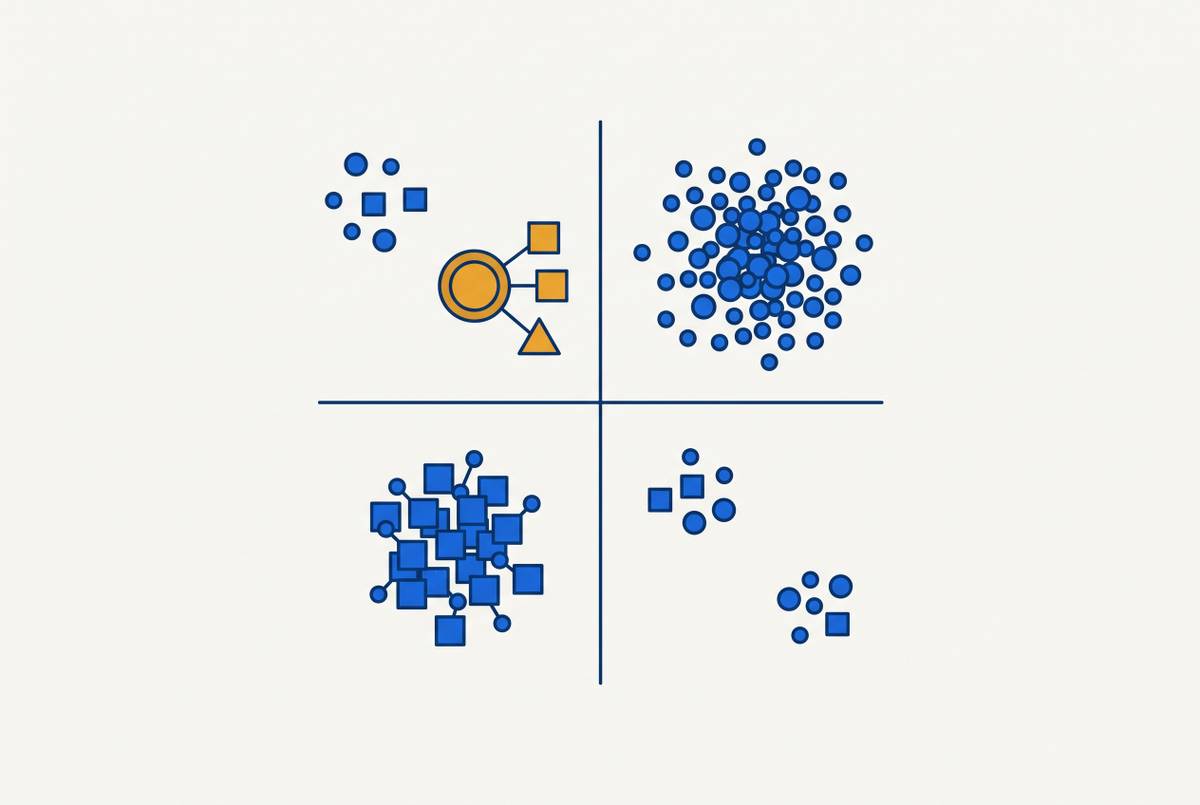
Forget the tagline. Forget the one-pager with the arrows and the 2x2 matrix nobody remembers a week later. At the operational level, positioning is four decisions.
Who you're for, and I mean sharper than "mid-market companies" or "teams with data problems." Specific enough that the product's value is obvious on first read, no persuading required.
What category you occupy. This is the frame a buyer reaches for when deciding what else to compare you against. Get it wrong and you lose deals on lineup, not merit.
What problem you own, the one sentence a customer says to a colleague explaining why they bought you. "We needed something that does X" beats "we needed a tool with 40 integrations," every time, no contest.
And then the one everybody skips: what you are not. Usually skipped under pressure to close a deal that doesn't quite fit. The boundary is what makes the first three credible. Skip it, and "we serve anyone who needs X" becomes the default message, which means every sales call starts from zero, with the rep building a case for relevance before they've even pitched anything.
The clearest way to think about it: positioning sets the context a product gets evaluated in. Change the context, you change who you're up against, which changes whether you win. These four decisions get made either way. The only real choice is whether you make them on purpose.
How category choice determines who you compete against
Category is the shortcut buyers use to build a shortlist. Pick wrong, and you've placed yourself in a lineup you can't win, no matter how good the product actually is underneath.
Here's the fork most founders hit early. Position as general-purpose, and suddenly you're compared to companies with ten times your funding and a decade of feature parity. Position vertically instead, narrow the field, and relevance goes up while the competitor count goes down. Fewer rivals, sure, but ones you can actually beat.
That shows up directly in cycle length. A buyer who already understands your category shows up pre-educated, so less time gets spent explaining what kind of company you are and more time proving you're the best version of it. That alone can compress a cycle by weeks.
Pricing works the same way. Category sets the reference price in a buyer's head before your number ever hits the screen. Wrong category, wrong anchor, and the discounting starts before the negotiation even opens.
Veeva Systems made this call cleanly, and it's worth naming them for it. "CRM for life sciences" was a deliberate narrowing, a specific claim about who the product served. One phrase moved the comparison away from generic Salesforce implementations and into a category where specificity was the entire argument. Building a brand-new category takes a market-education budget most early-stage companies don't have lying around. Slotting into a sub-category buyers already get is almost always the smarter play on a seed-stage runway.
Where positioning breaks down in practice — the four failure modes
Four patterns keep showing up, and none of them announce themselves as positioning problems. They just look like everything else going wrong.
The too-broad ICP. Target "any SMB with a data problem" and your message lands weakly on everyone, strongly on no one. Shows up as low inbound conversion and reps who couldn't qualify a lead if their commission depended on it (it does, and that's the problem).
The features-as-differentiation trap. Lead with capabilities instead of a named problem and the buyer can't self-select before the call even starts. You'll know this one by its opening line: "so, what exactly do you do?" On a discovery call, that question is positioning failing in real time.
The wrong competitive frame. Position against a specific rival instead of around a customer problem, and you've tied your fate to their roadmap. Deals stall the second that competitor ships a feature you don't have, because you handed them the terms of the fight before it started.
Founder drift. Positioning is crystal clear in the founder's head and nowhere else. Website says one thing, deck says another, cold outreach says a third. Prospects can't name what's off, but they feel it, and it reads as a lack of conviction even when the product is solid.
All four surface as the same complaint eventually: close rate is low, cycles keep stretching, or you're losing on price. That combination rarely gets diagnosed as a positioning problem, which is exactly why founders chase the wrong fix, tweaking the pitch deck, discounting harder, bolting on features, while the actual crack stays open. And here's the trap inside the trap: when a deal closes anyway, and it does happen even with weak positioning, founders read it as validation. The real signal only shows up in aggregate, and by the time it does, the cash is already spent.
What sharp positioning does to CAC, sales cycle length, and pricing power
Tight positioning changes where the prospect starts the conversation. They arrive already knowing why they might need you, which spares you the work of building that case cold.
That hits CAC directly. Precision targeting means the ad spend, the content, the outbound, all of it points at people most likely to convert. Smaller pipeline, higher conversion. That shift moves the unit economics of the whole business, not some vanity metric to screenshot for the board deck.
Cycle length moves the same direction. Most B2B buyers work through several pieces of content, somewhere around three to five touches according to 2025 research from Grow With Ghost, before they ever talk to a sales rep. If the positioning across that content is clear and consistent, the education is already done by the time the call starts.
Pricing power follows from category clarity too. "The only tool built specifically for X" supports a price a generic competitor simply can't touch, because there's no comparable anchor sitting in the buyer's head to drag the number down.
One proof point stuck with me. A SaaS founder, cited by Teract.ai in a March 2026 report, saw sales cycles shrink 40% against cold outbound, driven by consistent LinkedIn content built on clear positioning. Prospects brought that content up unprompted in discovery calls, after following the founder for three to six months first. Easy to call that a LinkedIn win, though the mechanism runs deeper: the 40% traces back to clarity of point of view, with LinkedIn simply serving as the pipe it flowed through.
Why the founder's public voice is the fastest way to operationalize positioning at the early stage
Early on, nobody trusts your brand yet, because there isn't one. No case study library, no marketing budget big enough to move a needle, no decade of market presence to lean on. What you do have is a founder, and that founder is the single most credible asset the company owns right now.
The data backs this up plainly. According to the 2025 Edelman–LinkedIn report, cited by Understory Agency, 86% of B2B decision-makers trust thought leadership as a signal of capability more than they trust marketing materials. That's a direct vote for the founder's voice over polished company-page copy, cast by the exact people you're trying to sell to.
There's a distribution gap worth knowing too. Personal LinkedIn profiles generate 8x more engagement than company pages, per 2026 research from La Growth Machine. Structurally, the founder's own feed does more positioning work than any branded content the company could put out at this stage of the game.
So the founder's LinkedIn presence functions as more than a personal branding hobby: it's the positioning engine. Every post does one of three jobs: defines the category, signals who the ICP is, or stakes a claim on a specific problem. The goal isn't entertainment or follower count. The goal is answering the exact questions a qualified prospect already has, so by the time they find you, the sales call starts warm instead of cold.
Teract.ai's March 2026 research found 78% of B2B SaaS companies that grew from $0 to $5M ARR had founders actively posting on LinkedIn. Correlation, not causation, obviously, but the mechanism isn't mysterious either: visibility gives inbound the surface area to qualify itself before a rep ever picks up the phone. LinkedIn also drives 80% of B2B social leads, per that same Grow With Ghost 2025 data. For a founder without a sales team yet, that tells you exactly where the one spare hour in your day should go.
What positioned founder content looks like versus generic thought leadership
Most founder content fails one of two ways. Either it's personal narrative with no commercial point of view attached, or it's generic industry commentary that could've come from literally anyone in the space. Neither reinforces positioning, no matter how many likes it racks up.
Positioned content does something specific every time. It signals who the audience is, what problem the founder is the authority on, and what makes the company's approach different. Consistently, post after post, not once and done.
Here's the principle underneath it. Generic content that avoids saying anything specific gets scrolled past, because there's nothing in it to agree or disagree with. Specific, opinionated content is what builds the authority that pulls in qualified inbound. The point isn't manufacturing controversy; it's having an actual point of view, which is what positioning looks like when it shows up in a feed.
Simple test, if you want one: after reading the post, does a qualified prospect know whether they're the right customer? If the answer's no, you've built awareness at best. That isn't positioning work yet.
A few format notes, briefly, because they matter less than people think. Carousels uploaded as PDFs carry the highest average engagement of any LinkedIn format, 6.60% according to Averi.ai's December 2025 data, handy when you're unpacking a framework that benefits from sequence. Posting three to four times a week with real depth beats posting daily with surface-level takes by roughly 10x on engagement, per 2025-2026 tracking from Windmill Growth. And sticking to a narrow set of themes gets rewarded by the algorithm now, which happens to line up exactly with what good positioning already demands: say the same clear thing, over and over, until it sticks in someone's head uninvited.
The compounding part is the part that actually matters, though. Buyers who follow a founder for three to six months before ever booking a demo show up with the vocabulary and the conviction already loaded in. The sales cycle doesn't just shrink, it changes shape entirely, because the first call was never really the first touchpoint to begin with.
How positioning shapes the fundraising narrative at the early stage
Founders miss this connection constantly: the positioning that shortens a sales cycle shortens a fundraising cycle too. Investors carry the exact same trust gap buyers do, and they close it the exact same way, through a clear, consistent point of view they'd already noticed before the meeting.
Capital isn't the bottleneck right now. US venture investment hit $91.5 billion in Q1 2025, per BAM Agency. Differentiation is the bottleneck, and narrative is frequently what decides which deals inside that pool actually get funded.
At the early stage, the product's too new to evaluate meaningfully and the metrics are too thin to mean much of anything. What investors are really assessing is whether the founder holds a clear, defensible point of view on a problem worth solving.
That question shifts by stage, too. Pre-seed, it's founder-market fit: why is this specific person the right one to own this problem. Seed, it's severity and timing: why now, and what early signal says the ICP is real. Series A, the question turns to defensibility: why can't someone with triple your funding just copy this next quarter.
A founder with a consistent, opinionated public presence walks into those meetings with credibility half-built already. "Why you" gets partially answered before slide one, instead of opening cold. Edelman and LinkedIn's 2025 B2B Thought Leadership Impact Report, drawn from 1,934 decision-makers, found 95% say thought leadership makes them more receptive to outreach. That figure was measured on buyers, but the dynamic with investors plays out the same way.
The minimum viable positioning exercise for a founder doing this today
None of this needs a consultant, a rebrand, or a week off-site drowning in sticky notes. It needs four honest answers and the discipline to check whether those answers actually show up everywhere a prospect might run into you.
Who is the one customer type for whom this product is the obvious choice, the specific profile, not the whole addressable market on your TAM slide? What's the one problem this product solves best, the one the customer says out loud, not the feature list you're proudest of? What comparison frame does a buyer actually reach for, and can you win inside it? And what do you deliberately exclude, which customer, which use case, which deal are you consciously walking away from?
Then run the audit. Pull the website, the sales deck, the LinkedIn bio, the last five things you posted. Check all four answers against every piece of it. Wherever they don't line up, that's precisely where deals are leaking out the side, quietly, every week.
Try the public voice test for one month straight. Write only about the problem you claim to own, aimed only at the audience you claim to serve. Watch who shows up. If the right people start engaging and the wrong ones drift off, it's working.
Here's what done actually looks like. A prospect reads a post, checks the site, books a demo, and never once needs a rep to explain why they're a fit. That's positioning doing the qualification work before anyone dials a phone. It's a habit too, not a fix-it-once task, maintained across content and sales calls and investor meetings alike. The founders who keep at it build category authority that compounds quietly over time, and one day you look up and it's turned into something the spreadsheet just can't capture.